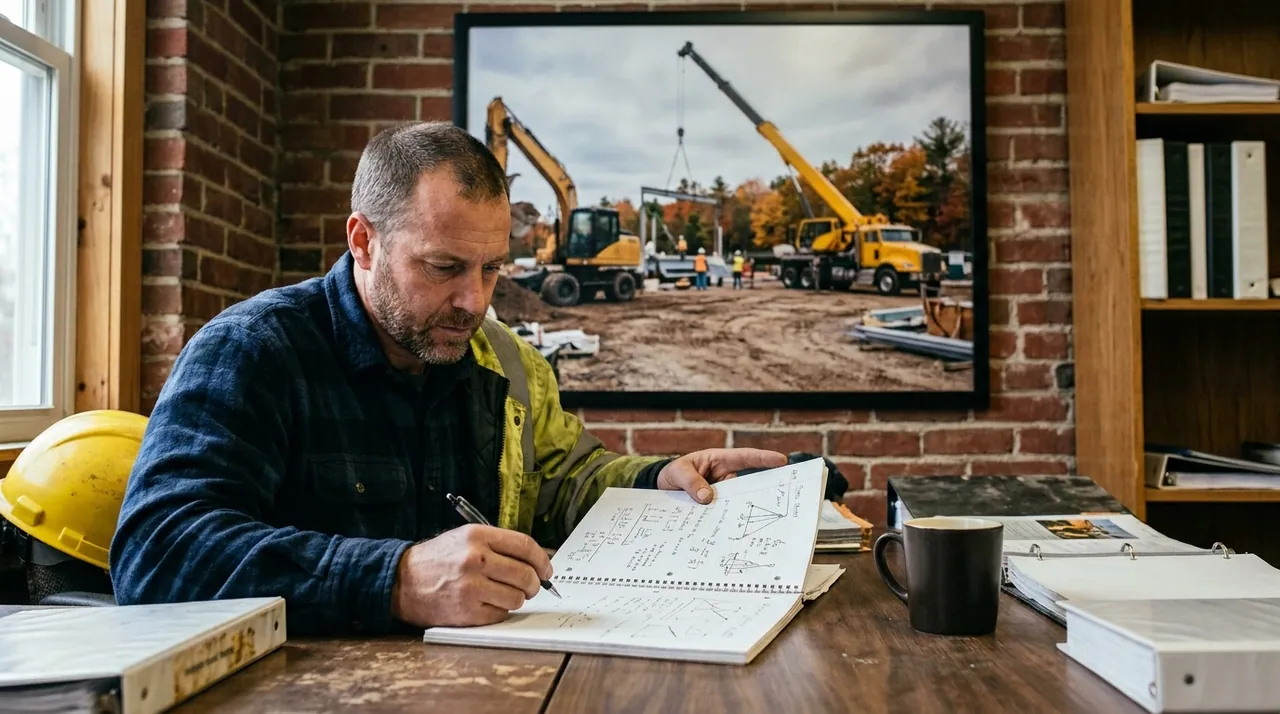
You have covered the rules, the machines, the hazards, and the inspection routines. Now it is time to pull everything together into a single, clear picture before exam day. This session is a structured review, not a re-teaching of individual topics. The goal is to sharpen the specific distinctions that appear on the Massachusetts 2A and 1C exam questions — the numbers, the classification lines, the trench rules — and to help you walk into the test room knowing exactly what restriction you hold and what it authorizes you to operate.
Licensing facts you must have cold
The legal authority for hoisting licenses in Massachusetts comes from M.G.L. c. 146, and the implementing regulations live in 230 CMR 6.00 — not 520 CMR 6.00, which covers something else entirely. The issuing agency is the Division of Occupational Licensure (DOL), Office of Public Safety and Inspections (OPSI). The exam will test those distinctions directly.
The basic eligibility facts: age 18 minimum, $75 application fee, two-year license term, and continuing education required under 230 CMR 6.04 before renewal. None of these are complex, but they are the kind of administrative detail that trips up candidates who skimmed the licensing module.
Keeping the equipment classifications straight
The 2A restriction covers excavators and backhoes, and it rolls in the 2B, 2C, and 2D sub-classifications beneath it. When you hold a 2A you are authorized on the full range of excavating machinery. The 1C restriction covers hydraulic boom trucks — meaning telescoping and knuckle-boom equipment that lifts with hydraulics alone and has no wire-rope hoist line.
The two distinctions the exam hammers hardest: first, the 1C does not cover loaders or backhoes — those are 2A machines. Second, the presence or absence of a wire-rope hoist line is what separates a 1C machine from a 1B machine. If the boom truck raises its load through a wire-rope drum, the operator needs a 1B, not a 1C. If you see the words "wire rope" in an exam question about a boom truck, the answer is almost certainly 1B — and that is outside the 2A/1C credential.
Trench rules and lifting rules in plain terms
For trench safety under 520 CMR 14.00: a protective system is required any time an excavation reaches five feet in depth. A means of egress — a ladder or ramp — is required once the trench hits four feet. Spoil piles must be set back at least two feet from the edge. Soil type drives what kind of protective system is acceptable. And Dig Safe must be contacted through 811 before any ground is broken. These five facts cover the majority of trench-safety questions you will see.
For boom-truck lifts, the two concepts that appear most often on the exam are the load chart and the net-versus-gross capacity distinction. The chart gives you gross capacity at a given radius. To find the maximum load you may actually attach to the hook, you subtract the weight of the hook and all rigging. If the chart shows 6,000 pounds gross and the hook and rigging weigh 800 pounds, your maximum load is 5,200 pounds. Outriggers must be fully extended and the machine must be on firm, level ground before any lift begins. No device that limits overload may ever be bypassed.
Shared hazards and how to approach exam questions
Regardless of which machine you are on, the same fundamental hazards apply. Hand-signal and stop-signal authority means one designated signaler controls the operator — and a stop signal from anyone must be obeyed immediately. The swing-radius exclusion zone keeps workers out of the arc where the counterweight or boom can strike them. Power-line clearance requirements apply identically to excavators and boom trucks. Struck-by and caught-in hazards account for a large share of serious injuries on both machine types.
For the exam itself, develop a habit of reading each question carefully for the specific restriction or threshold being tested. Many wrong answers are plausible if you miss a key word. Watch for depth numbers — four feet and five feet mean different things in the trench rules. Watch for the phrase "wire rope" in any boom-truck question. And when a question describes a machine, identify the restriction it falls under before you evaluate the answer choices. That discipline — classify first, then answer — prevents most of the avoidable errors.
Key Takeaways
- •Licensing authority is M.G.L. c. 146 and 230 CMR 6.00; DOL/OPSI issues the license; age 18, $75 fee, two-year term, CE required at renewal.
- •2A covers excavators and backhoes (includes 2B/2C/2D); 1C covers hydraulic telescoping and knuckle-boom trucks with no wire-rope hoist line — wire rope means 1B.
- •Trench rules: protective system at 5 feet, egress required at 4 feet, 2-foot spoil setback, call 811 first.
- •For boom-truck lifts, subtract hook and rigging weight from the chart's gross capacity to get the true maximum load; full outriggers on firm level ground, no overload-device bypass.
- •On exam questions, identify the restriction being tested before evaluating answer choices — depth numbers and the words 'wire rope' are the key cues.