The hydraulic system is what transforms a forklift from a rolling platform into a working machine. Every time you raise a load, tilt the mast, or engage a side-shift attachment, you are commanding pressurized fluid through a circuit of pumps, valves, and cylinders. Understanding how that circuit works — and how each control connects to it — is the foundation for operating safely and for catching problems before they become incidents. The MA 1D exam tests both your grasp of the system and your judgment about when something is wrong enough to pull the truck out of service.
How the hydraulic circuit works
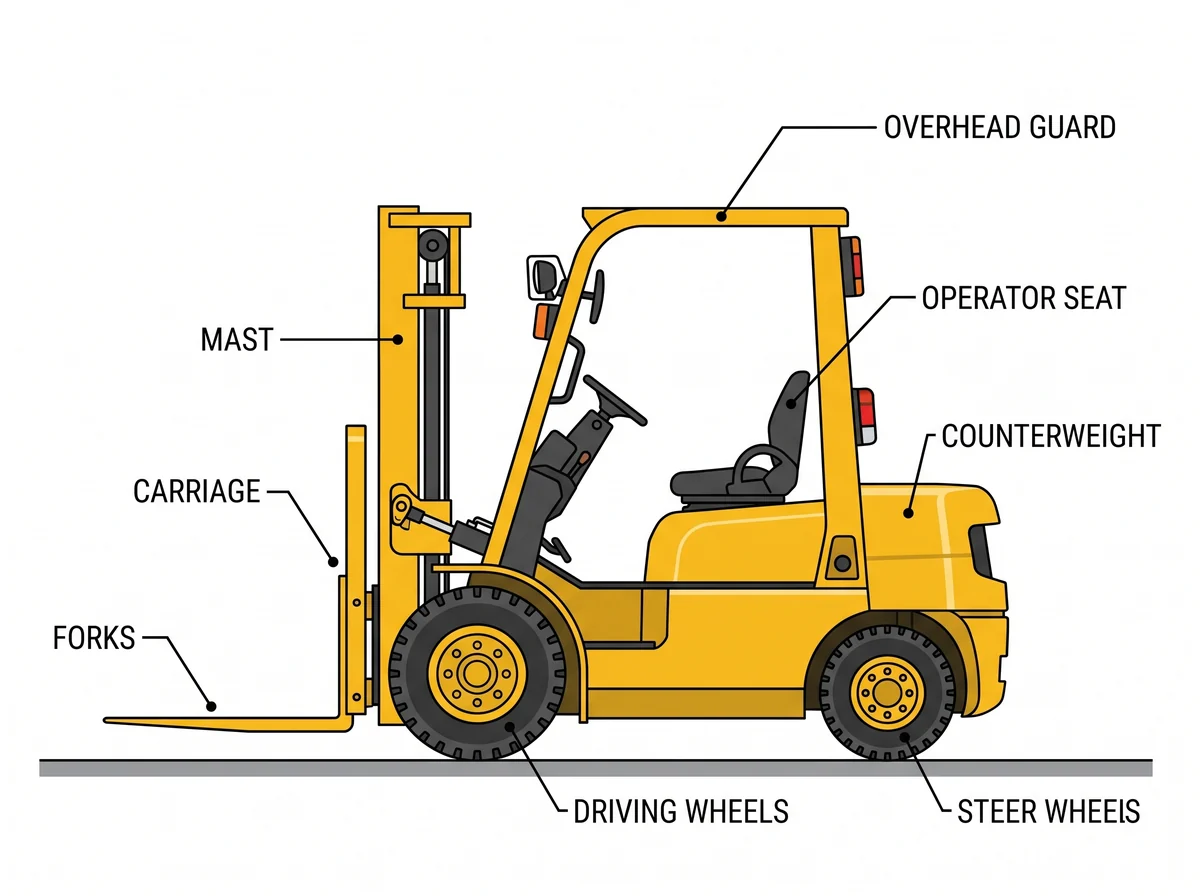
A forklift's hydraulic system has four essential parts: a pump that draws fluid from a reservoir and builds pressure, directional control valves that route that pressure to the right cylinder when you move a lever, lift cylinders that extend to raise the carriage, and tilt cylinders that push or pull the mast forward and back. The pump is engine-driven, so hydraulic power only exists when the engine is running.
The control valves are the link between your hands and the work. Each lever you move shifts a spool inside a valve, opening a path for pressurized fluid to act on a cylinder. When the lever returns to neutral, the valve blocks flow in both directions and the load should hold position. If the mast slowly drifts down on its own while the controls are in neutral, the valve or lift cylinder seals are leaking internally — a condition that takes the truck out of service.
Lift and tilt: the two primary controls
The lift control raises and lowers the carriage along the mast. Lowering requires discipline — the load must come down smoothly and under control at all times. Never allow a load to free-fall, even briefly: it shocks the frame, stresses the chain and cylinder seals, and can cause the load to shift.
The tilt control rotates the mast forward or backward. Back-tilt — leaning the mast toward the operator — is the standard carrying and travel position. It seats the load against the carriage backrest and keeps the load center inside the truck's stability triangle. Forward tilt is a precision tool, used only to pick up or place a load. Return to back-tilt before you travel.
Forward-tilting an elevated load is one of the most dangerous things an operator can do. As the mast tips forward, the load center moves ahead of the front axle, reducing stability and risking a tip-over with little warning. Keep tilt minimal whenever the forks are elevated. If you need to place a load on a high rack, make only the small forward movement needed to set the load — never exaggerate the tilt.
Auxiliary functions and control discipline
Many trucks carry additional hydraulic functions: side-shift moves the carriage laterally without repositioning the truck, fork positioners spread or close the forks, and reach mechanisms or attachment controls are common on specialized equipment. Each function draws on the same hydraulic circuit and demands the same discipline — smooth inputs, controlled movement, and no operation while anyone is in the path of the load.
Jerky or aggressive lever inputs spike pressure, wear seals and hoses faster, and cause load sway. Move every lever deliberately and proportionally. Never activate any hydraulic function when a person is within range of the moving load or attachment.
Warning signs and the park procedure
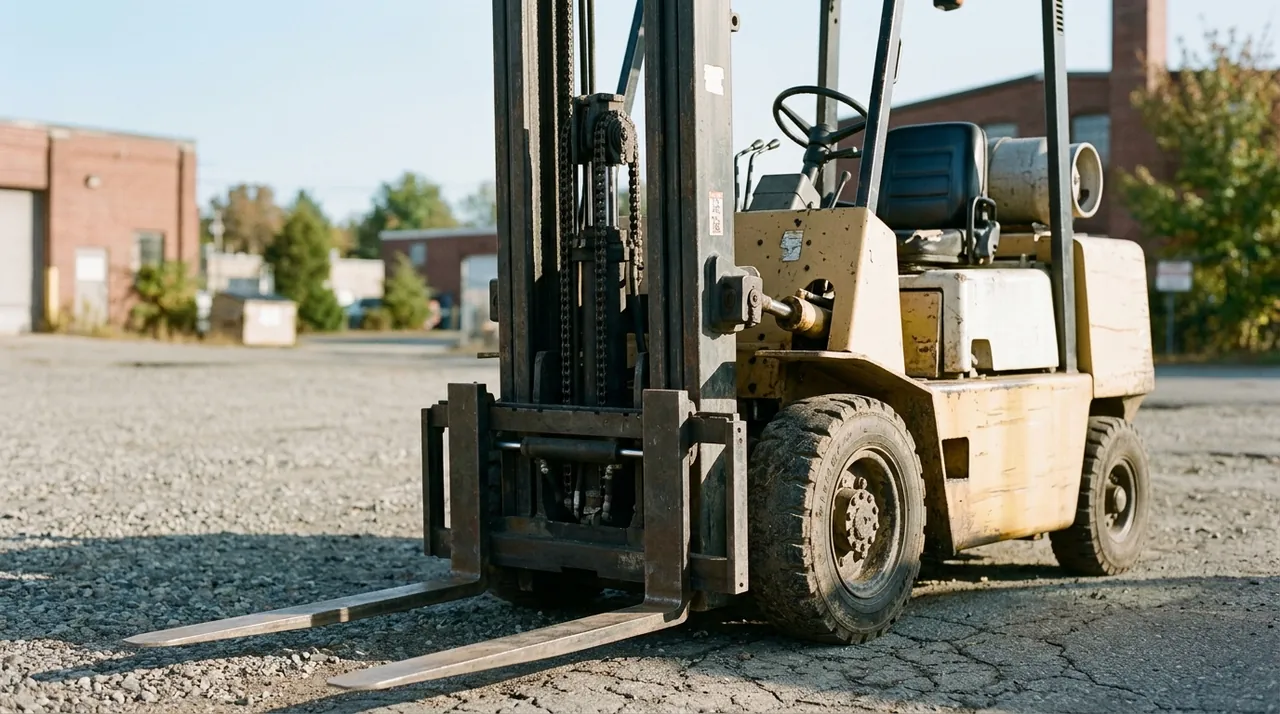
The hydraulic system communicates its problems clearly. A visible fluid leak from any hose, fitting, or cylinder is an immediate out-of-service condition. Slow or jerky lift points to low fluid, a failing pump, or a restricted valve. Mast drift in neutral means internal leakage. Unusual whining or cavitation noise from the pump means it is starving for fluid or fighting a restriction. Any of these findings means the truck is tagged out of service until it is repaired.
When you park, always lower the forks flat on the ground, set all controls to neutral, apply the parking brake, and turn the key off. Forks left raised are a struck-by hazard for any pedestrian who passes nearby. This sequence also releases residual pressure in the lines, which is safer for anyone who may service the truck.
Key Takeaways
- •The hydraulic system — pump, reservoir, control valves, and cylinders — only has power when the engine runs; reservoir level and fluid condition are your first diagnostic checks.
- •Back-tilt is the normal carrying and travel position; forward tilt is used only to pick up or place a load, and only with the load at the lowest safe height.
- •Tilting a raised load forward shifts the center of gravity ahead of the front axle and can tip the truck — keep tilt minimal whenever the forks are elevated.
- •Leaks, slow or jerky lift, mast drift in neutral, and unusual pump noise are all out-of-service conditions — tag the truck and report before returning it to work.
- •Park with forks flat on the ground, controls in neutral, brake set, and key off — raised forks at rest are a pedestrian struck-by hazard.