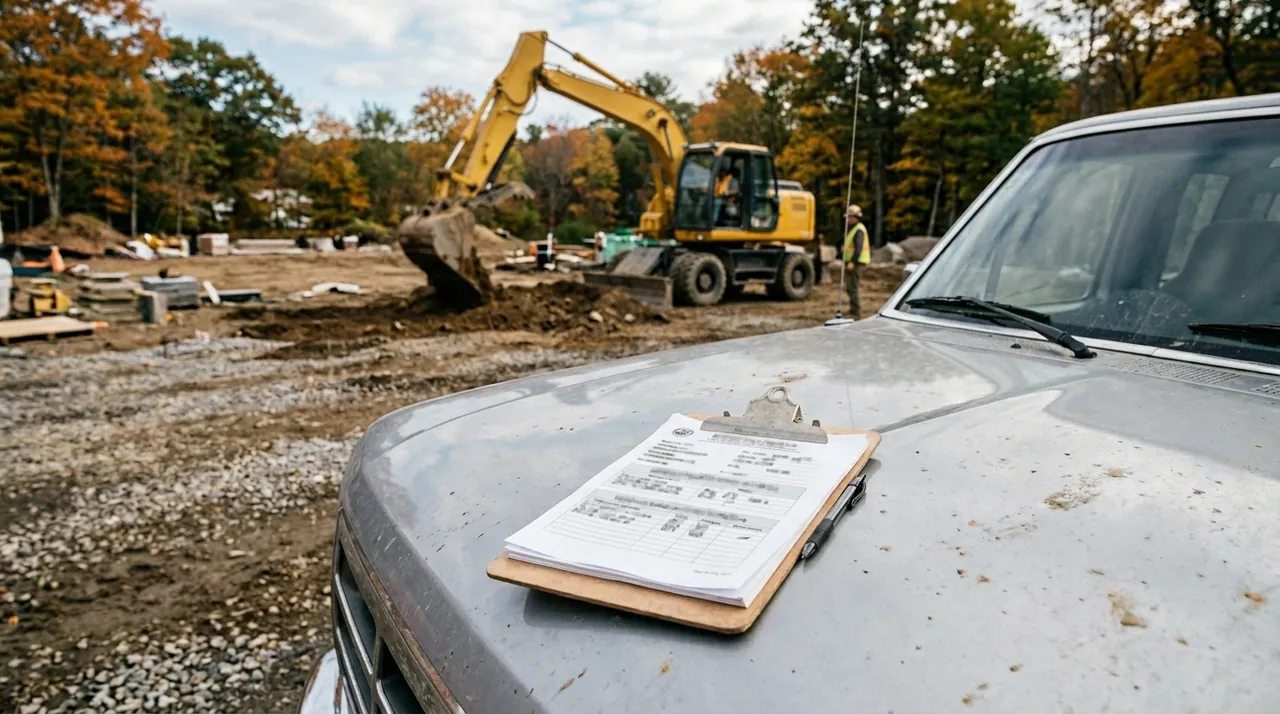
Before you ever climb into the cab of an excavator on a Massachusetts job site, the state wants proof that you know what you are doing. That proof is your hoisting engineer license — and the law that requires it, MGL Chapter 146 Section 53, also sets the exact conditions under which you need one, who is exempt, and what the licensing process looks like. This session walks through all of it, because the exam draws from these rules directly and because understanding the legal foundation helps everything else in this course make sense.
Who needs a hoisting license and why the law requires it
MGL Section 53 is the core statute. It establishes three conditions that, together, trigger the requirement to hold a license: the equipment being operated qualifies as hoisting machinery, the operation is happening in Massachusetts, and the work is not covered by one of the enumerated exemptions. The law exists because hoisting equipment — excavators, cranes, bulldozers, and similar machines — can kill or seriously injure people quickly and without warning when operated by someone who does not understand the machine or the environment it is working in. Requiring a license is the legislature's way of setting a floor on competency before someone puts that equipment in motion on a public or commercial job site.
Your 2A license specifically covers Group 2 excavating equipment. That classification matters because Massachusetts organizes hoisting licenses by the type of equipment you are authorized to operate. When you hold a 2A, you are credentialed for excavating machinery — an excavator, backhoe, or similar machine — and not automatically for crane or derrick work, which falls under different classifications.
Minimum requirements: age, exam score, and the application process
The requirements to sit for the 2A exam are straightforward. You must be at least 18 years old, and you must pass the exam with a minimum score of 70 percent. There is no partial credit for almost passing: below 70 is a failing score. If you fail, you may need to wait before retaking the exam — check the current OPSI retest rules for the waiting period and procedure before you reschedule, since scheduling the test before you are ready can cost you both time and another application fee.
The application itself goes through the MA Division of Occupational Licensure, which is the state agency that administers the hoisting license program. Each restriction class carries a non-refundable application fee of $75. Non-refundable means exactly that — if you pay, then cancel or fail, the fee does not come back. Once you pass and the license is issued, it is valid for a two-year cycle, after which you renew to keep it active.
Exemptions: when a license is not required
The statute carves out specific categories of operators who are not required to hold a hoisting license. Knowing the exemptions matters both for the exam and because you will encounter workers in these categories on real job sites.
Agricultural operators running hoisting equipment in direct connection with farming are exempt, as are employees in public utility supervised training programs operating under close oversight. Industrial lift trucks — forklifts and similar equipment — operated on a company's own private property are also exempt from the hoisting license requirement. Vocational school students operating equipment as part of an approved training curriculum and workers in approved apprenticeship programs also fall under exemptions while participating in those programs. The common thread is a controlled training context, a narrowly scoped use, or operation confined to private property under supervision. Step outside those boundaries onto a commercial job site and the exemption no longer applies.
License duration and what it means to let it lapse
Once you pass the exam, the license the Division of Occupational Licensure issues is valid for two years. At renewal you keep it active. Let it lapse and you are operating without authorization on any job that requires one — creating liability for you and your employer. The two-year cycle is not long, and renewal paperwork has a way of sneaking up on busy operators, so build a reminder well before the expiration date.
The exam tests the specifics covered in this session directly: the minimum age, the passing score, the application fee, the renewal cycle, and the exemptions. Know these numbers cold.
Key Takeaways
- •MGL Section 53 requires a hoisting license when operating qualifying hoisting machinery on a Massachusetts job site — the 2A covers Group 2 excavating equipment specifically.
- •Minimum age is 18; minimum passing score is 70 percent; applications go through the MA Division of Occupational Licensure with a $75 non-refundable fee per restriction class.
- •The license runs on a two-year renewal cycle — let it lapse and you are operating without authorization.
- •Key exemptions include agricultural operators, public utility supervised programs, industrial lift trucks on company property, vocational school students, and approved apprenticeship program participants.