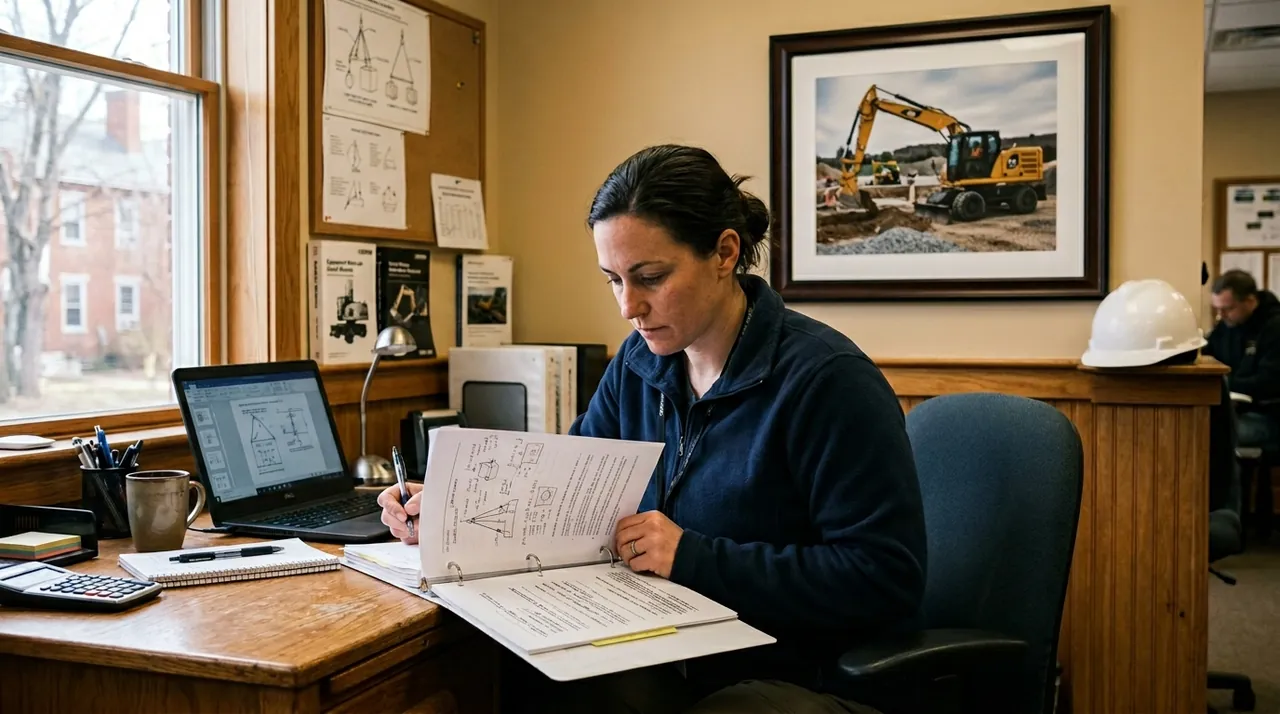
You have covered pre-shift inspections, soil classification, protective systems, equipment components, and the regulations that govern who can operate and under what conditions. This final session is about turning that knowledge into passing score on exam day. You will work through scenario-based questions that mirror the real 2A format, and you will leave with a clear picture of what to bring, what to expect, and how to use every minute of your remaining study time wisely.
What the exam actually looks like
The Massachusetts 2A hoisting exam is a multiple-choice test, typically 30 to 40 questions, and you need a 70 percent or better to pass. That is a solid threshold — it means you cannot coast through on partial knowledge in one area and expect gaps elsewhere to average out. The questions are scenario-driven, meaning they rarely ask you to recite a definition. Instead they put you in the cab, describe a condition or situation, and ask what you do next.
On exam day, you must bring a government-issued photo ID. Arrive early. The exam is administered at a scheduled time and late arrivals are typically turned away. Treat it like a job site — being late is not an option you have.
How to spend the night before
Cramming an entire course the night before is counterproductive. What actually helps is a focused review of two specific areas: the critical numbers list and hand signals. Critical numbers are the thresholds and minimums the exam uses to build scenario questions — things like slope angles for different soil types, how much soil to bench, and how far from a trench edge equipment must stay. If you have those numbers sharp, a large portion of the scenario questions become straightforward.
Hand signals are tested because a licensed operator is expected to direct and respond to a ground guide correctly, even when verbal communication is impossible. Review each standard signal — stop, emergency stop, travel, swing, raise and lower — until they are automatic. These are the kind of details that can save or cost you two or three questions, and two or three questions can be the difference between a 68 and a 72.
The scenario categories you will see
The 2A exam organizes its questions around a predictable set of scenarios. Pre-shift inspection questions will describe a defect — a non-functional alarm, a drifting bucket, a cracked hose — and ask the correct response. The answer is almost always the same: stop work, tag the machine out of service, and notify your supervisor. There is no scenario on this exam where a production deadline justifies operating compromised equipment.
Soil and excavation questions will give you field conditions and ask you to classify the soil correctly, then choose the right protective system. Remember that visible fissures in a trench wall immediately disqualify that soil from Type A, regardless of what other tests suggest. Regulatory questions will test whether you know who needs a license, what activities are exempt, and what the penalties are for unlicensed operation. Equipment questions will ask you to identify components or recognize hydraulic hazards. Operations questions will present situations involving hand signals, swing radius, and proximity to a trench edge — all areas where errors on the job site translate directly into injuries.
If you do not pass — what comes next
If your score is below 70 percent, do not treat the result as final. Check current OPSI retest rules for the exact procedure and any waiting period before you can sit again, and be aware that a failed applicant may also have the right to request a hearing. Either way, use the interval for genuine remediation rather than a quick repeat attempt. Look at your score report, identify the categories where you lost the most points, and go back to the source material for those topics specifically. Operators who treat the second attempt as just another coin flip without changing how they studied tend to fail again.
Get more hands-on time with the equipment if possible, because the gap between knowing the answer on paper and recognizing the same situation in the field is where real understanding develops. The exam tests whether you can apply this knowledge under pressure — the best preparation is making the scenarios feel familiar, not foreign.
Key Takeaways
- •The 2A exam is 30 to 40 multiple-choice questions with a 70 percent passing threshold — no single weak area can be safely ignored.
- •Bring a government-issued photo ID and arrive early; being late typically means losing your seat and your fee.
- •Spend the night before reviewing critical numbers and hand signals, not re-reading everything.
- •Scenario categories follow a pattern: defect response, soil classification, protective system selection, regulations, component ID, and operations including swing radius and trench proximity.
- •If you fail, check current OPSI retest rules for the procedure and any waiting period — then use the time for targeted remediation on your weak categories, not just a repeat of the same study habits.