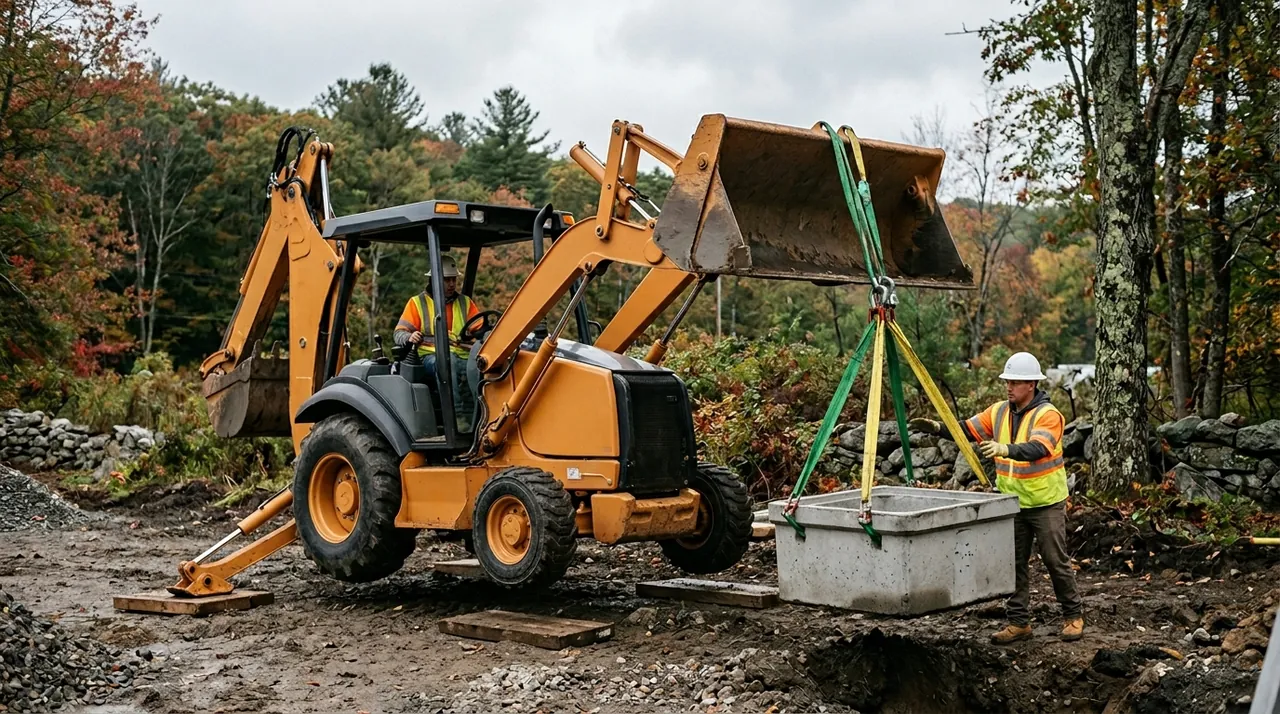
Knowing how to run a backhoe loader is only part of the job. The other part is knowing how to set the machine up before the first bucket moves, and how to manage the hazards that come with swinging a loaded bucket next to an open trench. This session covers the full backhoe digging sequence — from positioning the machine and deploying the stabilizers through completing a trenching cycle — along with the stability and struck-by hazards the exam will test you on directly.
Setting up: stabilizers, level ground, and the front bucket
Before you touch the dipper, configure the machine for digging. The sequence matters: position on firm, level ground, lower both stabilizers fully until the pads are bearing solidly, then set the front loader bucket down to anchor the front of the machine. You are building a stable four-point base.
Leveling is not optional. An unlevel machine changes the effective reach and capacity of the backhoe and makes the swing arc unpredictable. Check the ground under each stabilizer pad — soft ground under one corner will cause the machine to shift as load builds. If the ground is too soft, place cribbing or a stabilizer mat before you dig. If the machine is not level and stable, it is not ready to dig.
The trenching cycle and spoil placement
The digging cycle is a repeating sequence: position the boom over the cut, lower the boom and crowd the dipper in, curl the bucket to load it, lift clear of the trench, swing to the spoil side, dump, and return. Smooth, controlled movements reduce dynamic forces on the machine and keep the trench wall from being undercut by an errant bucket.
Spoil placement is a safety issue. Keep spoil at least two feet back from the trench edge — piling dirt right at the lip adds surcharge load to the trench wall and raises the risk of a cave-in. Also, never dig beneath the stabilizers or let the trench edge creep toward them. If the ground collapses under a stabilizer pad, the machine tips into the trench. Keep your digging geometry ahead of the machine's footprint.
Swing limits and lifting with the backhoe
The backhoe on a loader-backhoe swings within a limited arc, not 360 degrees. Mechanical swing stops define each side. Know where those stops are before you swing under load — hitting a stop with a moving, loaded bucket puts a violent dynamic force on the machine that can cause tipping or structural damage. Decelerate smoothly before the stop, let the load settle, then dump.
When using the backhoe to make an actual pick — placing pipe, for example — use the manufacturer's designated lift point and consult the machine's lift capacity chart. Capacity drops quickly as reach increases. Extending the dipper to maximum reach under load is when the machine is most vulnerable to tipping forward off the stabilizers. Maximum reach means minimum capacity. If a load feels marginal at that reach, it is marginal.
Tip-over, struck-by, and overhead hazards
Tip-over risk peaks during wide swings with a loaded bucket, sudden stops with a suspended load, and any time the operator works near the machine's stability limit on soft or sloped ground. Swing smoothly, decelerate before the stop, and never snap the controls under load.
Struck-by hazards exist around the entire machine. Anyone in the backhoe swing arc or the tail-swing zone can be struck by the boom, dipper, bucket, or the machine itself as it pivots. Keep all workers clear during operation. When repositioning, raise the stabilizers and front bucket, travel to the new position, and re-level — never drag the machine forward using the backhoe. For any significant travel, stow and lock the backhoe completely.
Before raising the boom, account for overhead hazards — power lines, structural members, or other equipment. Underground hazards matter equally when positioning the machine: buried utilities can be struck by a stabilizer pad or undercut by the bucket. Survey the work area for both before you begin digging.
Key Takeaways
- •Set up in sequence: level ground, both stabilizers down, front bucket anchored before any digging begins.
- •Keep spoil at least two feet back from the trench edge to avoid surcharge load on the trench wall.
- •Never dig beneath the stabilizers — if the ground fails under a pad, the machine tips into the trench.
- •The backhoe swings within a limited arc — know your swing stops and decelerate smoothly before reaching them under load.
- •Maximum dipper reach means minimum capacity and stability — if a load feels marginal, stop and reassess.
- •Before raising the boom, check for overhead hazards; before setting stabilizers, verify there are no buried utilities beneath.