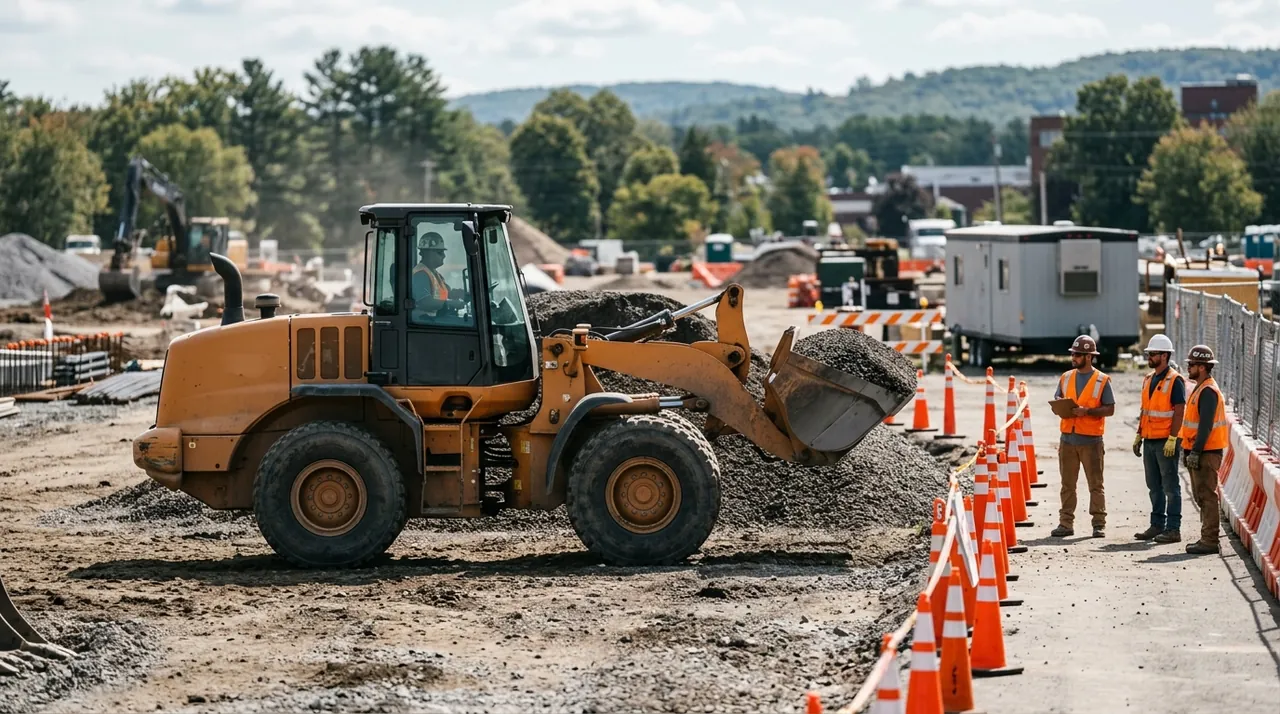
A wheel loader has inherent blind spots, a pinch point built into its frame, and enough mass to run over a pedestrian before the operator knows anyone was there. This session covers the layers of protection that keep operators and ground workers alive: the structural safeguards that protect the operator when something goes wrong, the regulatory requirements that make those safeguards effective, and the visibility and traffic-control practices that prevent incidents in the first place.
ROPS and FOPS: what they do and why damage ends the shift
The rollover protective structure, or ROPS, is the engineered survival space that keeps the operator from being crushed if the machine tips over. The falling-object protective structure, or FOPS, adds overhead protection from debris or a load spilling back over the cab. Both are certified to specific load ratings by the manufacturer, and that certification disappears the moment someone modifies a ROPS upright, cuts a section to improve clearance, or bends the structure in a tip-over. Any structural damage to, or unauthorized modification of, the ROPS or FOPS is an immediate removal-from-service condition. The machine does not return to work until repaired or replaced to manufacturer specification — there is no workaround.
Seat belts and the reverse alarm
ROPS protects the operator only if the operator stays inside the protected zone. A seat belt is the only thing that does that. Under 29 CFR 1926.602, the seat belt is mandatory whenever ROPS is present — which on a wheel loader means every time you sit in the cab. An operator thrown through the ROPS opening in a rollover loses all the protection the structure was designed to provide.
The same OSHA section addresses the hazard behind the machine. When the operator's rear view is obstructed — and on a wheel loader it almost always is — a reverse signal alarm is required, or the operator must use a designated signaler. In tight quarters with workers nearby, the alarm is not enough; a ground guide takes over and the machine waits until the guide is in position and communication is confirmed.
Blind spots, pedestrians, and the articulation pinch point
Wheel loaders account for a disproportionate share of struck-by and backover fatalities on construction sites. The geometry explains why: the area directly behind the machine is a large dead zone the operator cannot see from the seat, and the lower front area disappears when the bucket is raised. Mirrors, backup cameras, and lights reduce the risk but do not eliminate it — they are aids to awareness, not substitutes for spotters and communication.
Articulated loaders add a hazard that other equipment does not have: the frame hinge at the center of the machine. When the front and rear frames pivot to steer, the gap at the outside of the turn closes with crushing force. No one may stand in or pass through the articulation area while the machine is operating. Establish exclusion zones around the working area, require high-visibility clothing for workers on foot, make positive eye contact before moving, and never allow riders. Confirm overhead clearance from power lines and structures before entering any travel path.
Mounting, dismounting, and working under a raised bucket
Always use three points of contact when getting on or off the machine — two hands and one foot, or two feet and one hand — and face the machine throughout. Never jump from the cab. Never mount or dismount while the machine is moving.
A raised bucket held up only by hydraulic pressure can drop without warning if a hose fails or a control is bumped. Never work under a raised bucket without installing the manufacturer-supplied support or equivalent blocking first. This applies equally to operators, mechanics, and anyone else who needs access to the area beneath a lifted structure.
Key Takeaways
- •ROPS preserves an operator survival space in a rollover; FOPS protects from falling objects. Any structural damage or unauthorized modification is an immediate removal-from-service condition.
- •Under 29 CFR 1926.602, the seat belt is mandatory whenever ROPS is present. A reverse signal alarm or designated signaler is required when rear view is obstructed.
- •Wheel loaders are a leading source of struck-by and backover fatalities. Key blind spots are directly behind the machine and below the raised bucket.
- •The articulation hinge is a severe crush hazard unique to articulated loaders. No one may enter the articulation zone while the machine is running.
- •Use three points of contact when mounting or dismounting, and never work under a raised bucket without blocking in place.