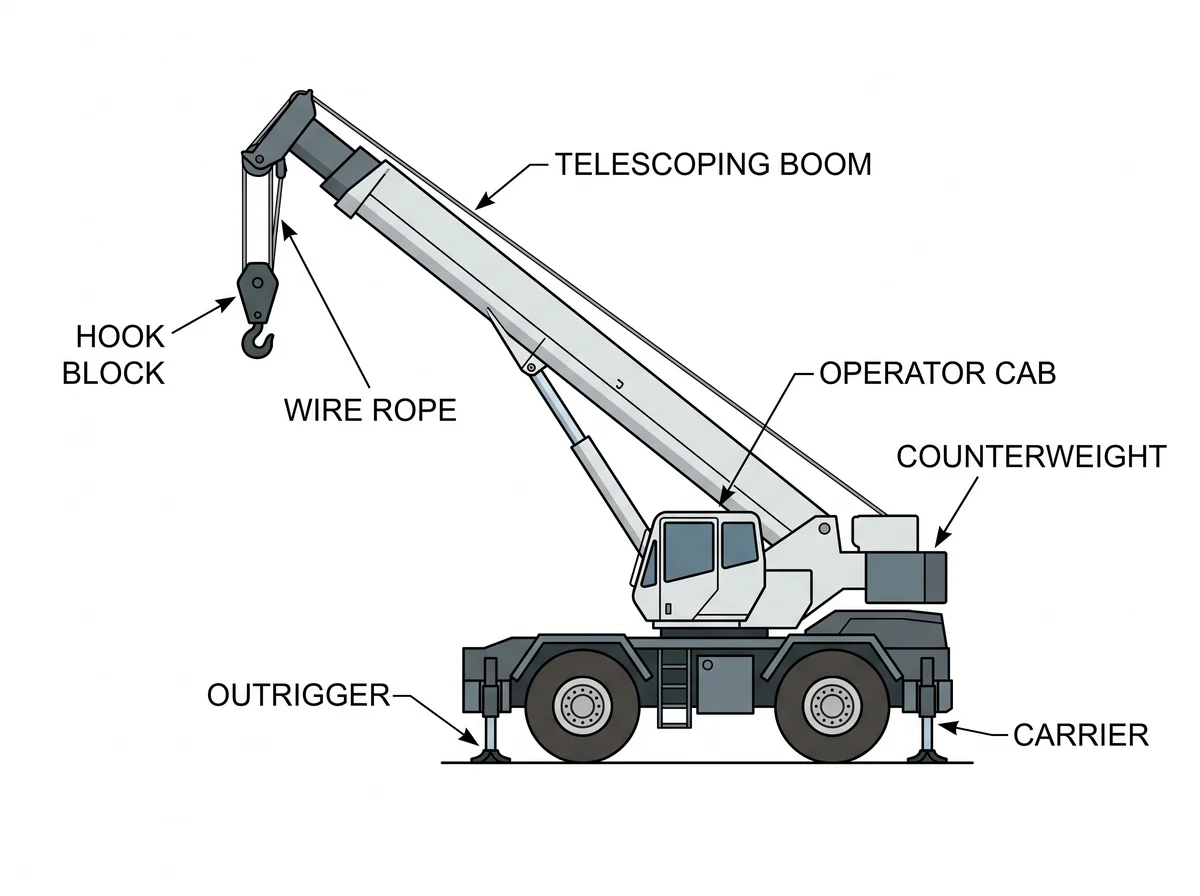
Before a hydraulic boom crane lifts anything, it needs to pass inspection — every shift, no exceptions. The pre-operation inspection is the moment you, as the operator, take personal responsibility for the machine's condition. OSHA Subpart CC requires a competent-person inspection at the start of each shift, and Massachusetts mirrors that expectation. This session walks you through the complete inspection sequence for telescoping and articulating hydraulic boom cranes, identifies the conditions that must put a machine out of service, and explains what you need to verify on load charts and safety devices before the first lift.
OSHA's Inspection Requirements and Who Must Perform Them
OSHA Subpart CC establishes three tiers of crane inspection. The shift inspection is what concerns you most day-to-day: a competent person must inspect the crane before operations begin each shift. A competent person is defined as someone who can recognize a hazard and has the authority to correct it, including removing the machine from service. As the licensed 1C operator, that person is typically you.
Beyond the daily check, Subpart CC requires periodic inspections (at least monthly, with written records) and annual inspections by a qualified person. Document every finding. If a defect exists, tag the machine out before operating it — not after your first lift.
The Walk-Around: Ground Up, Outside In
Start on the ground before you climb into the cab. Look under the machine for fresh fluid pooling — a fresh puddle tells you a leak developed since the last shift. Check ground conditions at the same time: soft soil under the outrigger footprint and buried utility risk need to be addressed before you deploy anything.
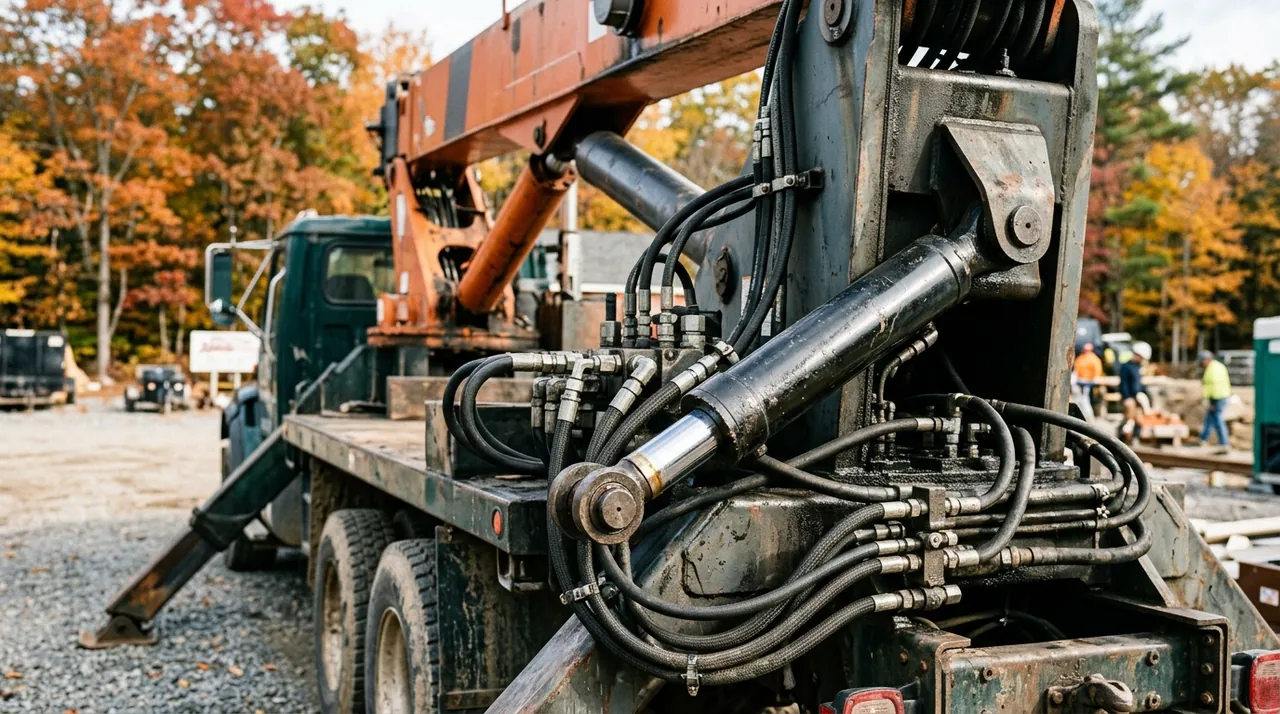
The boom is the heart of the inspection. On a telescoping boom, look for dents, wrinkles, cracks along the chord members, and worn or missing wear pads. Check the sheaves at the boom head and the hook assembly: the throat opening must not be stretched, the latch must snap shut firmly, and there must be no visible deformation or cracks in the hook body. On an articulating knuckle-boom crane, pay special attention to the knuckle joint — the pivot pins, the cylinders that drive it, and the hoses that cross the joint. Those hoses flex every time the knuckle bends, making them more vulnerable to chafing than static hose runs elsewhere on the machine.
Hydraulics, Outriggers, and the Drift Test
Check hydraulic fluid level and condition with the boom stowed. Fluid that appears milky signals contamination. Inspect all accessible hoses and fittings for abrasion, kinks, and seeping at the fittings. Then perform the drift test: raise the boom to a working angle with no load attached, hold position, and watch. A cylinder that slowly drifts down on its own has an internal seal failure — that machine must come out of service. The same test applies to outrigger jacks: extend them to working height and verify the jacks hold without sinking. A drifting outrigger jack under load is a tipping hazard.
Also verify the slew system by rotating the superstructure slowly and listening for grinding or binding that signals bearing wear.
Safety Devices, Load Chart, and the Go or No-Go Decision
Before any lift, verify every safety device is functional. The rated capacity indicator (RCI) or load moment indicator (LMI), if equipped, must be active and set for the current configuration. Test the anti-two-block device if installed — trigger it manually and confirm it cuts hoist function before the hook block can contact the boom head. The level indicator, horn, and all controls must respond correctly.
Then confirm the load chart. It must be present in the cab, legible, and specific to this machine's serial number and configuration. A missing or damaged chart means the crane does not operate — that is an OSHA requirement, not operator preference.
At the end of the inspection you make a go or no-go decision. A cracked or bent boom section, hydraulic load drift, a damaged or drifting outrigger jack, a deformed hook, a non-functional safety device, or a missing load chart are each an immediate no-go. Tag the machine, document the condition, and notify your supervisor before anyone touches the controls.
Key Takeaways
- •OSHA Subpart CC requires a competent-person inspection before each shift; as the 1C operator, that duty typically falls on you.
- •Walk the full machine before climbing in: ground conditions and leaks, chassis, boom sections and wear pads, knuckle joint and hoses (articulating cranes), hook, and cab controls.
- •Perform the hydraulic drift test on boom cylinders and outrigger jacks — a cylinder that creeps down under load has a failed seal and is an immediate removal-from-service condition.
- •Verify all safety devices (RCI/LMI, anti-two-block if equipped, level indicator, horn) and confirm the correct load chart is present and legible before the first lift.
- •A cracked boom, drifting cylinder, damaged outrigger, deformed hook, or missing load chart each require tagging the machine out — no exceptions, no shortcuts.