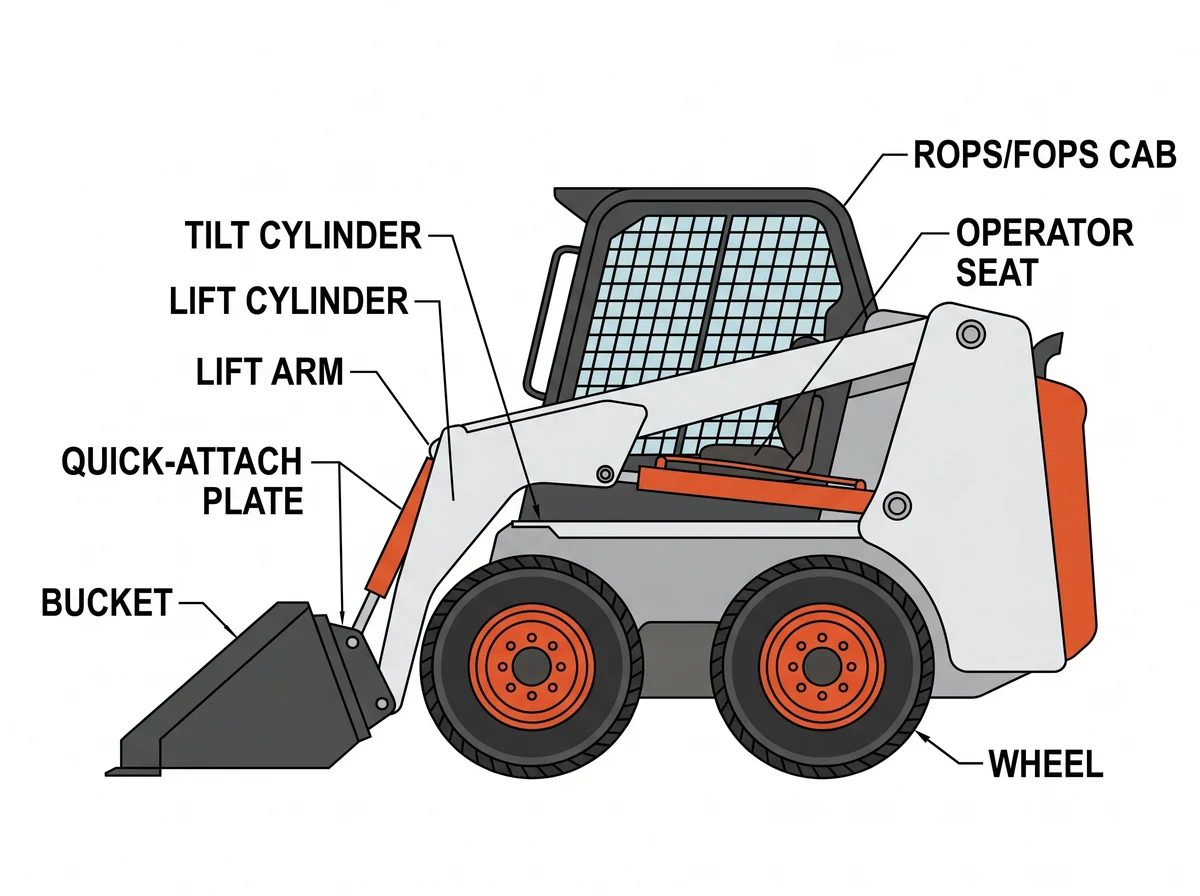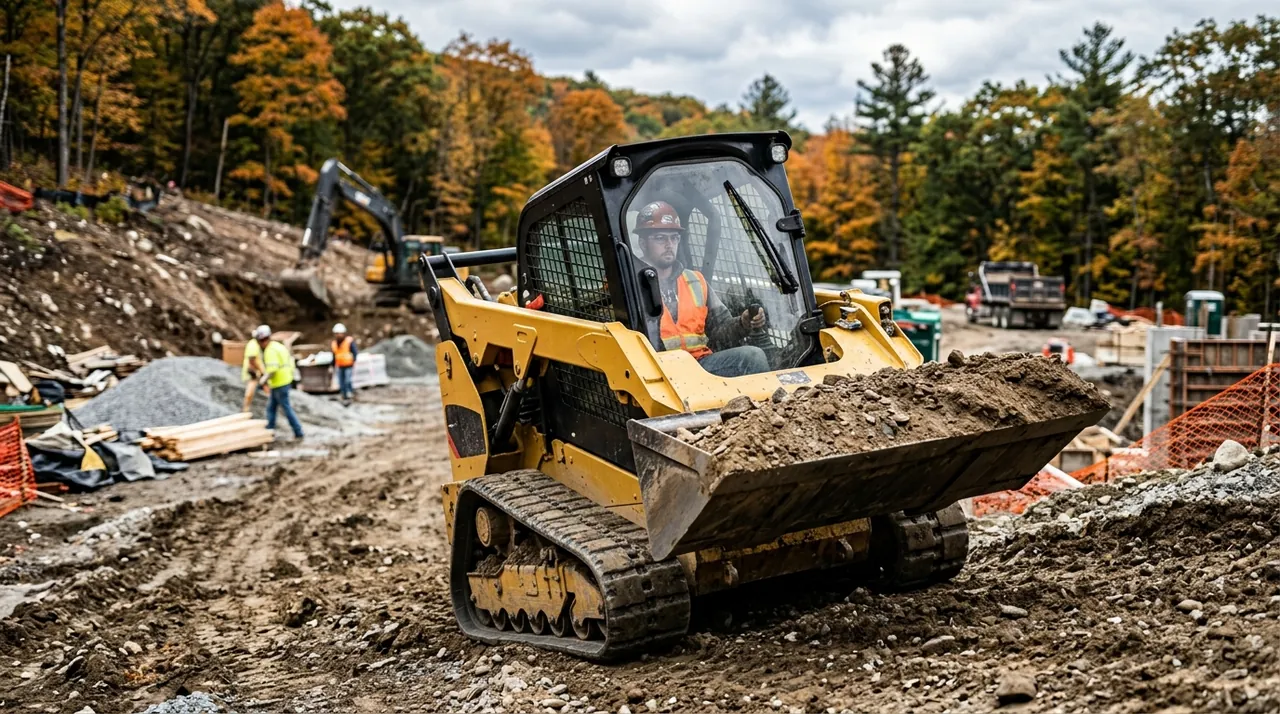
Class 2A is defined as all crawler and rubber-tired excavators and backhoes — but a 2A license is the broadest Class 2 restriction, so it also authorizes everything below it: 2B, 2C, and 2D machines. The skid steer is one of those included machines (a compact loader in the 2C/2D range), and your 2A license covers it. A skid steer looks simple — small, agile, and easy to jump into — and that simplicity is exactly what makes it dangerous for the unprepared. It combines a unique drive system, serious rollover risk, and strict federal requirements for protective structures into one compact package. This lesson walks through how the machine works, what OSHA and ROPS/FOPS rules require, and the hazards you must control every time you operate one.
How a skid steer steers — and why it matters
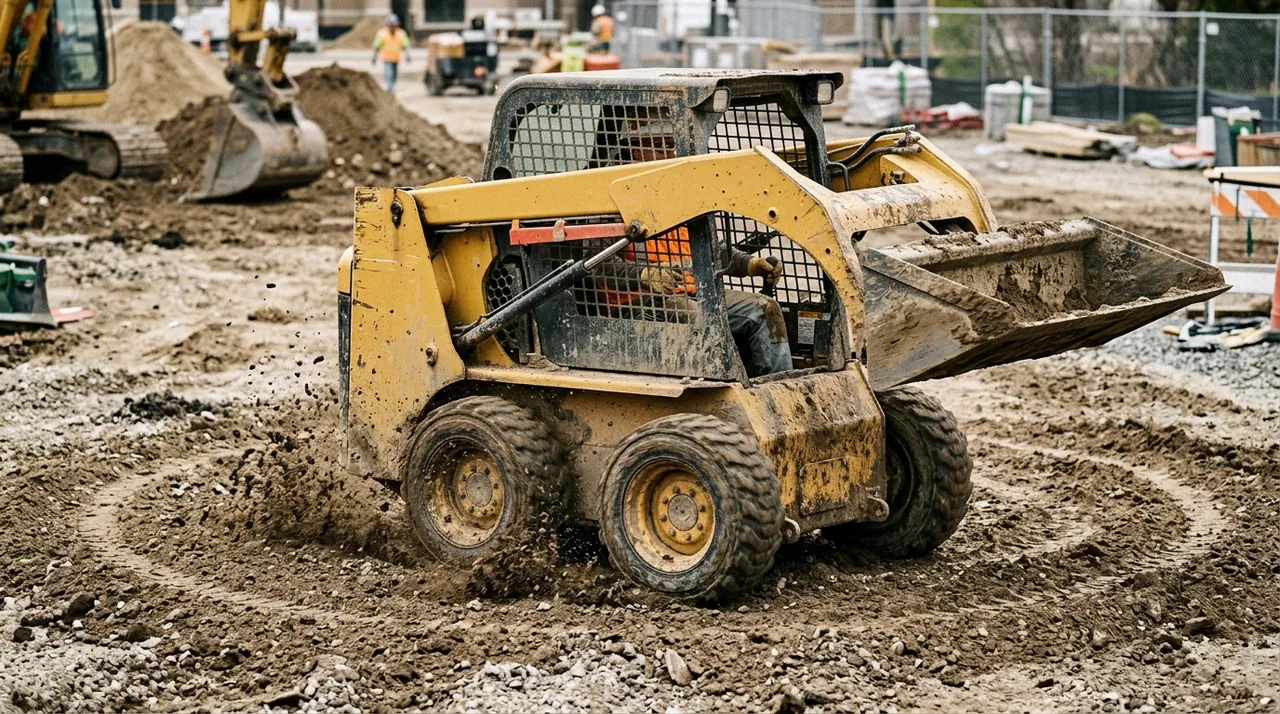
A skid steer turns by driving the wheels on each side independently. Speed up the right wheels, the machine pivots left; reverse one side while driving the other forward and you spin in place. The tires literally skid across the surface during a turn, which damages soft or finished ground more than a conventional steering axle would.
Lift arm geometry determines what jobs the machine is suited for. A radial-lift machine swings the arms in an arc — the attachment moves away from the machine as it rises, good for ground-level loading work. A vertical-lift machine keeps the attachment nearly plumb through the full stroke, giving more usable reach at height for stacking or working overhead. If the rated capacity plate is missing or unreadable, the machine stays parked until it is replaced.
Attachments and scissor-point guarding
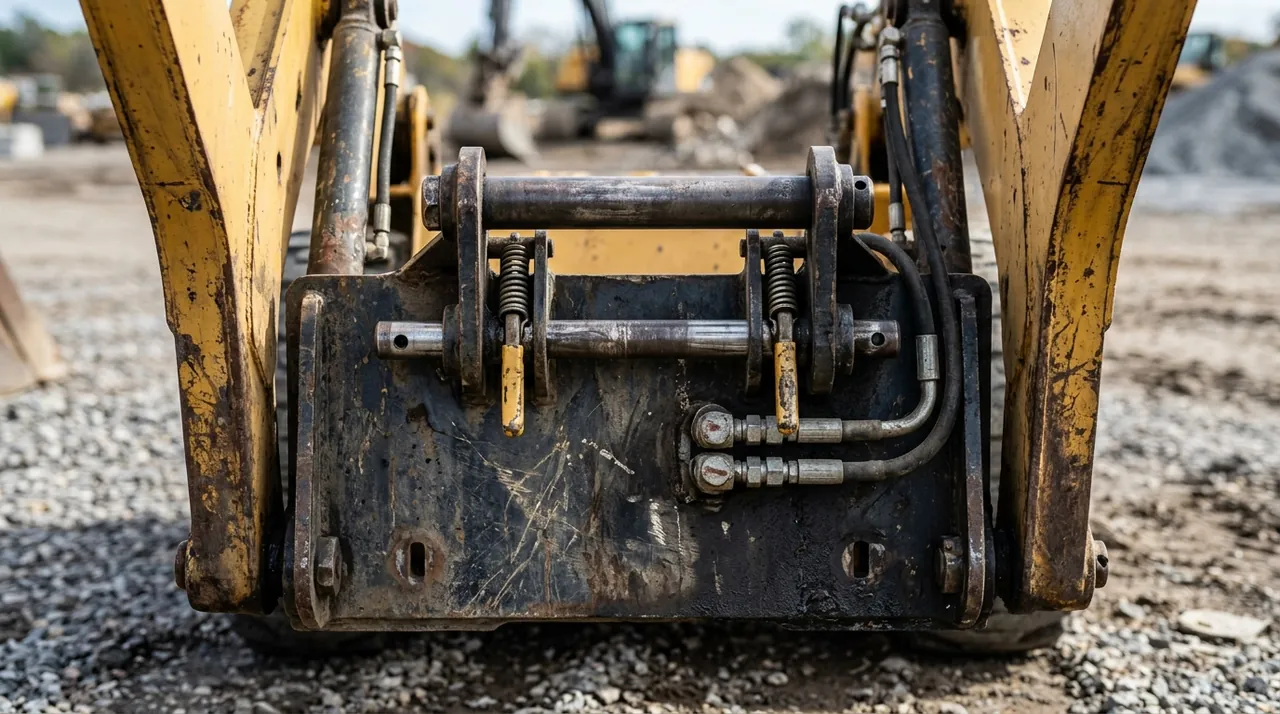
Most skid steers use a universal quick-attach plate, which lets operators swap buckets, forks, augers, and other tools in minutes. That speed creates a hazard: an attachment that is not properly seated and locked can release under load. Only approved attachments rated for the machine may be used, with locking pins fully engaged before lifting.
The scissor point is the pinch zone that opens and closes between the lift arm and the machine frame as the arms raise and lower. OSHA 29 CFR 1926.602 requires these points to be guarded. If the guard is missing or damaged, the machine is out of service immediately.
A second pinching hazard exists between the lift arms and the attachment frame itself during lowering. Workers must never stand or reach between the arms and the attachment when the lift arms are in motion — this zone closes rapidly and without warning.
ROPS and FOPS requirements
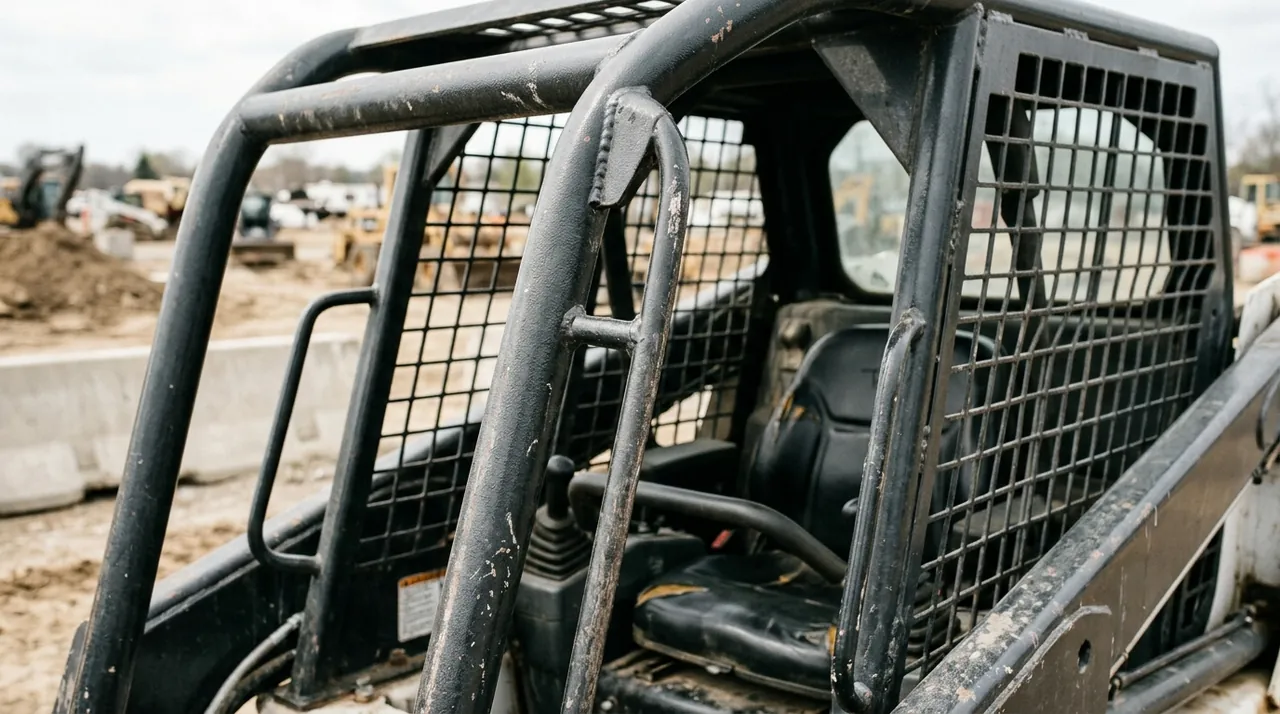
Every skid steer must have a Rollover Protective Structure. The standard the ROPS must meet depends on manufacture date. Machines built before July 15, 2019 could meet SAE J320a, J394, J395, J396, J397, or ISO 3471:2008. Machines manufactured on or after July 15, 2019 must meet ISO 3471:2008 only. The exam tests this cutoff, so know the date.
FOPS — Falling Object Protective Structure — is required when overhead hazards are present, such as working inside a building or under a structure where material could fall on the operator. Any modification to ROPS or FOPS, or any structural damage such as a bent upright or cracked weld, is an immediate removal-from-service condition. No field repair is acceptable; a damaged structure must be recertified before the machine returns to work.
Seat belt, reverse alarm, and rollover risk
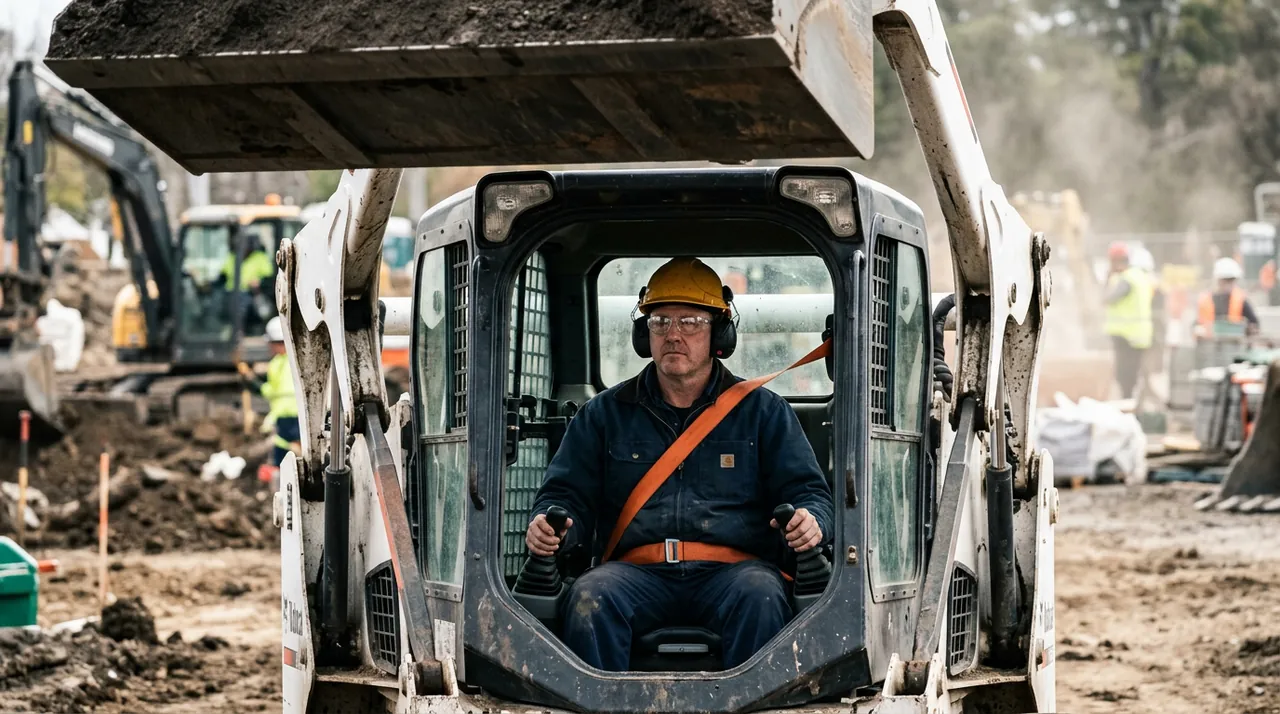
Under 29 CFR 1926.602, a seat belt meeting SAE J386-1969 is mandatory whenever the machine is equipped with ROPS — which means every compliant skid steer. ROPS only protects a belted operator; without the belt, a rollover ejects the operator into the cab structure that was supposed to protect them.
The same regulation requires a reverse signal alarm whenever the operator's view to the rear is obstructed. Because the machine body typically blocks the rear sightline, the alarm is a practical requirement on nearly every skid steer.
Rollover is the primary hazard unique to skid steer operation. The short wheelbase and high center of gravity — especially with a raised, loaded bucket — make the machine tip-sensitive on slopes and soft ground. Always travel with the load low, know the ground conditions before committing to a slope, and never raise a loaded bucket on a side slope.
Key Takeaways
- •Skid steers steer by driving each side independently; choose radial lift for ground-level work and vertical lift for height and reach.
- •Only approved, fully locked attachments may be used; scissor points on the lift arms must be guarded per 29 CFR 1926.602.
- •ROPS standard depends on manufacture date: before July 15, 2019 several SAE or ISO standards were accepted; July 15, 2019 and after requires ISO 3471:2008 only.
- •FOPS is required under overhead hazards; any structural damage or modification to ROPS or FOPS means immediate removal from service with no field repair.
- •Seat belt is mandatory with ROPS; reverse alarm required when rear view is obstructed; rollover risk peaks with a raised load on slopes or soft ground.