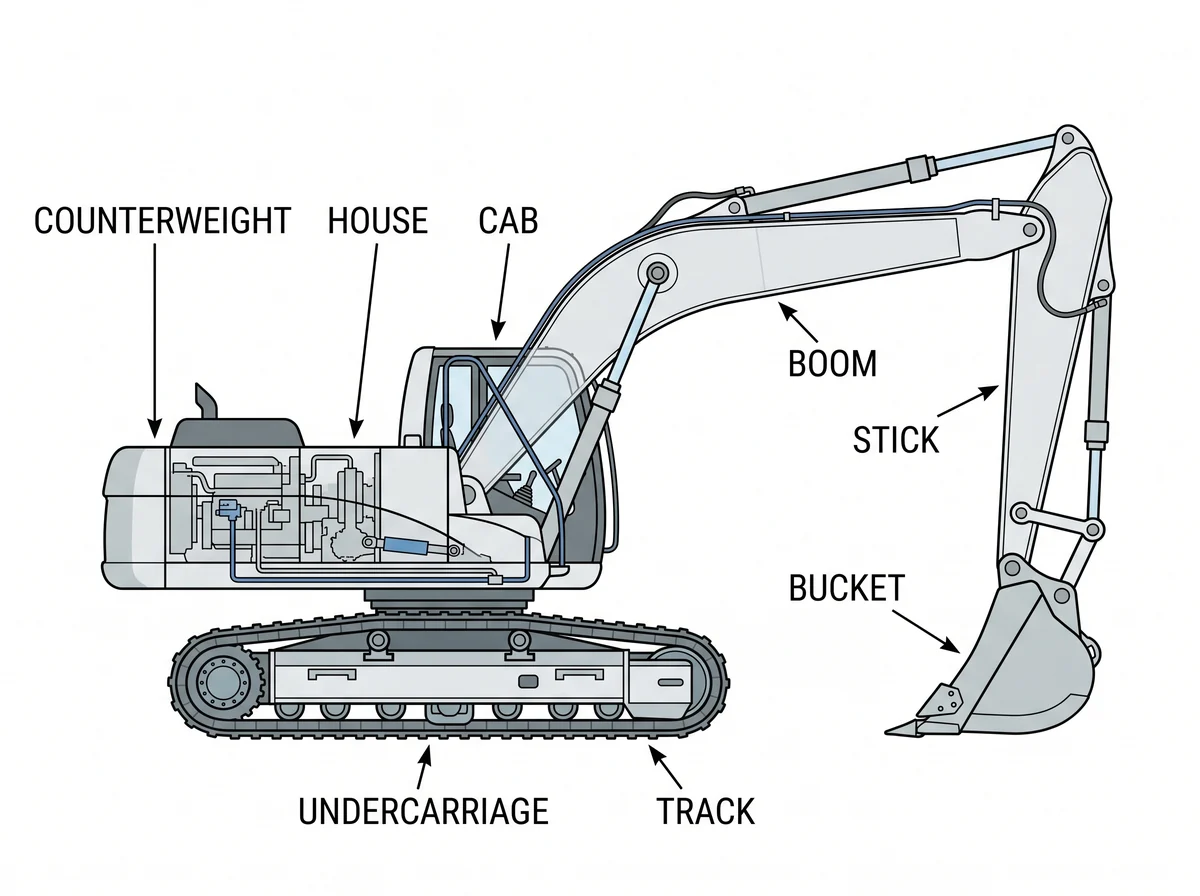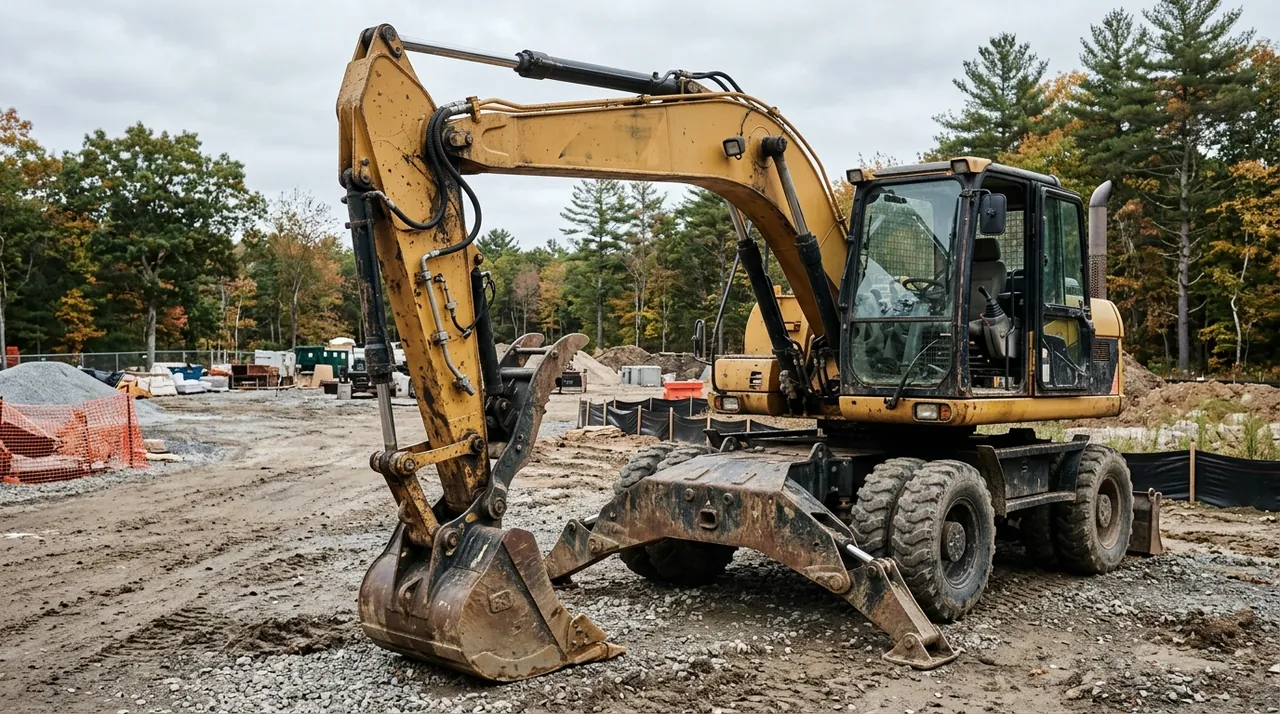
Hydraulics are what make an excavator work — they move the boom, swing the house, push the bucket through the ground — but that same power makes them one of the most dangerous systems on the machine. A modern excavator's hydraulic circuit routinely operates above 2,000 psi — pounds of force pressing on every square inch of hose, fitting, and seal. That pressure is invisible, and it is capable of causing catastrophic injury in a fraction of a second. This session covers how to read the condition of a hydraulic system, how to inspect it without putting yourself at risk, and exactly when a hose or fitting needs to come out of service.
Understanding the pressure you are working around
Excavator hydraulic systems routinely exceed 2,000 psi during normal operation, and that number changes how you think about every hose and fitting on the machine. At that pressure, a pinhole leak does not drip — it produces an invisible jet of fluid that can penetrate skin, clothing, and gloves without leaving an obvious wound.
This is called a hydraulic injection injury, and it is one of the most underestimated hazards in the trade. The fluid enters tissue under pressure, causing massive inflammation and tissue death that can result in amputation or death. What looks like a small puncture on the surface is often a limb-threatening emergency underneath. A separate hazard is hot oil spray: when a hose ruptures under operating pressure it throws heated fluid at high velocity, causing severe burns to anyone nearby. Both hazards are why your approach to hydraulic inspection must be deliberate.
The correct method for leak detection
Because a hydraulic leak under pressure is not always visible as a drip, you need a method that keeps your hands clear. The correct technique is to hold a piece of cardboard or use a mirror near the hose or fitting you suspect. The cardboard will show fluid if it passes through a pressurized jet, and the mirror lets you check behind fittings without reaching around them. Never run your bare hand along a pressurized hose to feel for a wet spot — this is exactly how injection injuries occur.
Before disconnecting any hose or fitting for inspection or replacement, depressurize the circuit first: lower all attachments to the ground, shut the machine down, and cycle the controls several times to bleed residual pressure trapped in the lines. Pressure can remain in a hose long after the engine stops, and cracking a fitting loose on a charged line will send hot fluid at high velocity at whoever is holding the wrench.
Hose ratings, routing, and removal-from-service criteria
Every hydraulic hose must meet a minimum safety factor of 4:1 — meaning it must be rated to burst at no less than four times the maximum working pressure of the system. That margin accounts for pressure spikes, heat cycling, and normal wear. Once a hose shows physical damage, that margin is compromised and there is no way to know by eye how much is left.
Remove a hose from service immediately if you find a visible bulge, cracks in the outer cover, abrasion that exposes the braid underneath, or a fitting that is weeping fluid. A bulge is especially critical because it means the inner structure has already begun to fail. During a routing inspection, also confirm that hoses are not bent at sharp angles, not resting against moving parts, and not pinched by surrounding structure — any of those conditions accelerates wear even when the hose looks intact.
Fluid condition and filter maintenance
Hydraulic fluid condition is readable by color. Amber or red and running clear means the fluid is good. Milky or cloudy fluid indicates water contamination from a failed seal, a leaking cooler, or condensation — water degrades lubrication and accelerates internal corrosion. Dark, thick fluid with a burnt smell signals overheating. Either condition warrants pulling the machine from service until the source is identified.
Filters at the reservoir, return line, and case drain must be inspected and replaced on the manufacturer's schedule. A clogged filter forces the system to bypass, meaning contaminated fluid circulates unfiltered through precision components. Staying on top of filter changes is the simplest way to extend system life and catch contamination problems before they cause a failure.
Key Takeaways
- •Excavator hydraulics routinely exceed 2,000 psi — a pinhole leak creates an invisible high-pressure jet, not a drip.
- •Hydraulic injection injuries are medical emergencies that can cause amputation or death; never use your bare hand to feel for leaks.
- •Locate leaks with cardboard or a mirror; always depressurize the circuit before disconnecting any hose or fitting.
- •Hydraulic hoses require a minimum 4:1 safety factor; bulges, cracks, exposed braid, or weeping fittings mean remove from service immediately.
- •Milky fluid means water contamination; dark or burnt fluid means overheating — both take the machine out of service until the source is found.