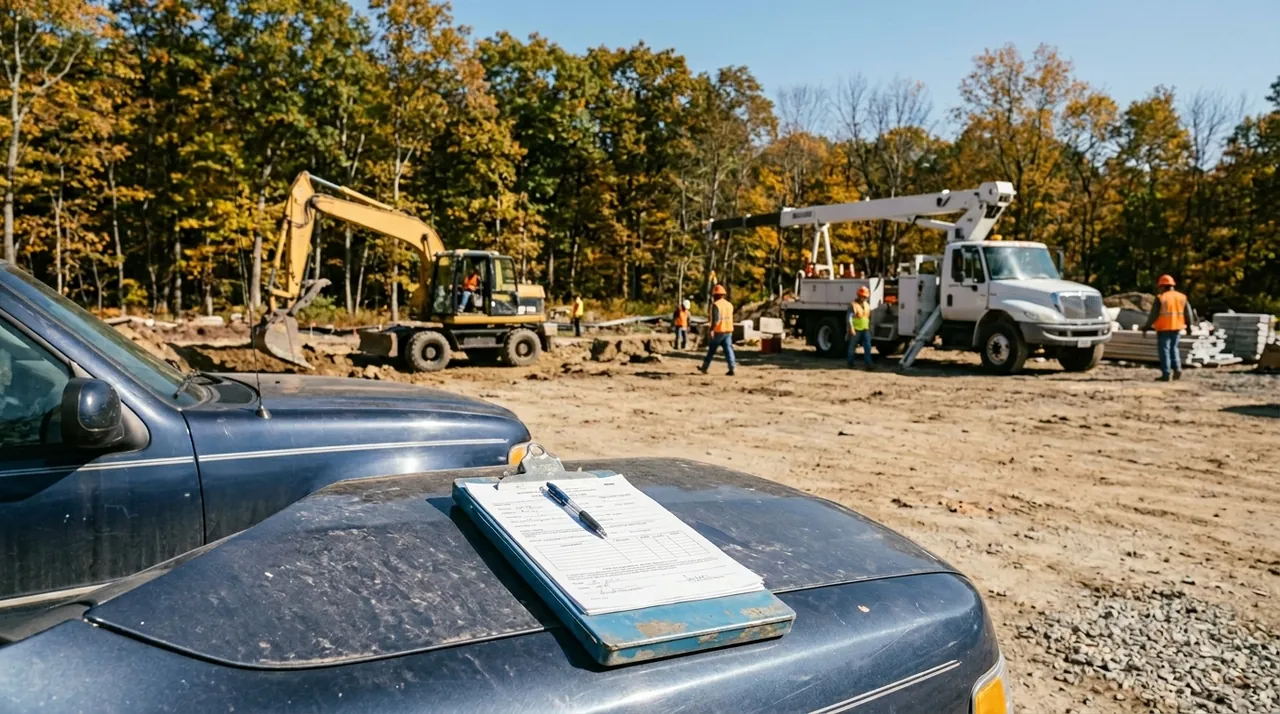
Before you ever touch the controls of an excavator or a hydraulic boom truck on a Massachusetts job site, you need a license in your pocket — and that license comes from a specific agency, under a specific statute, with specific rules attached. This session covers the legal foundation for the 2A/1C combined credential: who must be licensed, which agency issues the license, what the law and regulations actually say, and why the two restrictions you are preparing to hold are treated as separate qualifications even when they appear on the same operator card.
The statute and the regulation: what you need to cite
Massachusetts hoisting law lives in two places. The statutory authority is M.G.L. c. 146, specifically sections 53 through 54A, which establish the requirement that anyone operating hoisting machinery for hire or in connection with construction work must hold a valid license. The legislature set the rule; the regulation spells out how it works in practice.
The current implementing regulation is 230 CMR 6.00, titled Hoisting Machinery. If you have studied older materials, you may have seen this cited as 520 CMR 6.00. That citation was retired when the regulations were recodified. On the exam and on the job, always reference 230 CMR 6.00. Using the old number signals to an inspector that your knowledge is out of date, and it can matter if you ever need to contest a citation.
Who issues the license — and who does not
The issuing agency is the Division of Occupational Licensure (DOL), through its Office of Public Safety and Inspections (OPSI). This is a common exam point because many candidates still associate hoisting licenses with the former Department of Public Safety, which no longer exists in this role. Getting the agency name wrong in a real-world conversation can cost you credibility with an inspector or a compliance officer, and the exam tests it directly.
When you apply, you pay a $75 nonrefundable processing fee per license application. The license is valid for two years. You may renew up to 60 days before your expiration date, and 230 CMR 6.04 requires continuing education before renewal — hours spent in a course like this one count toward that requirement. If you let the license lapse, you are not permitted to operate covered equipment until it is reinstated.
Who must be licensed — and who is exempt
The license requirement applies broadly to operators of hoisting machinery, a term that covers any machine designed to hoist, lift, or move loads. Both excavating machinery (the 2A restriction) and hydraulic boom-truck cranes (the 1C restriction) fall squarely within that definition. The minimum age to hold a license is 18 years old; there are no exceptions to that floor.
The statute does carve out narrow exemptions. Agricultural operators working on their own land are not required to hold a hoisting license. Certain operators in supervised public-utility work, registered apprenticeship programs, and vocational training programs also fall outside the requirement while they are working under qualified supervision. These exemptions are specific and limited — if an operator is working commercially on a construction site, the exemption almost certainly does not apply. The exam will probe your ability to distinguish a genuine exemption from a situation that just looks like one.
Why 2A and 1C are separate restrictions on one card
The 2A restriction covers excavating machinery — excavators, trenchers, and related earth-moving equipment. The 1C restriction covers hydraulic boom hoisting — the kind of lift performed by a hydraulic boom truck or articulating crane. These are distinct equipment families with different operating principles, different hazard profiles, and different competencies the state wants to verify independently.
If your job requires you to run both an excavator and a hydraulic boom truck, Massachusetts requires that you qualify for and hold both restrictions. You do not get 1C coverage by passing the 2A exam, or vice versa. In practice, a single operator card can carry multiple restrictions once each exam is passed and each applicable fee is paid. The combined 2A/1C credential is exactly that — one card, two earned restrictions. This course is built around earning both at once, which is why the legal framework for the combined credential is the starting point.
Key Takeaways
- •The statutory authority is M.G.L. c. 146, sections 53-54A; the current regulation is 230 CMR 6.00 — not the old 520 CMR 6.00.
- •Hoisting licenses in Massachusetts are issued by the Division of Occupational Licensure (DOL) through the Office of Public Safety and Inspections (OPSI), not the former Department of Public Safety.
- •The license costs a $75 nonrefundable fee, is valid for two years, and requires continuing education before renewal under 230 CMR 6.04.
- •Minimum age to hold a hoisting license is 18; key exemptions include agricultural operators on their own land and operators in certain supervised apprenticeship or vocational programs.
- •2A (excavating machinery) and 1C (hydraulic boom hoisting) are separate restrictions requiring separate qualification — one card can carry both once each exam is passed.