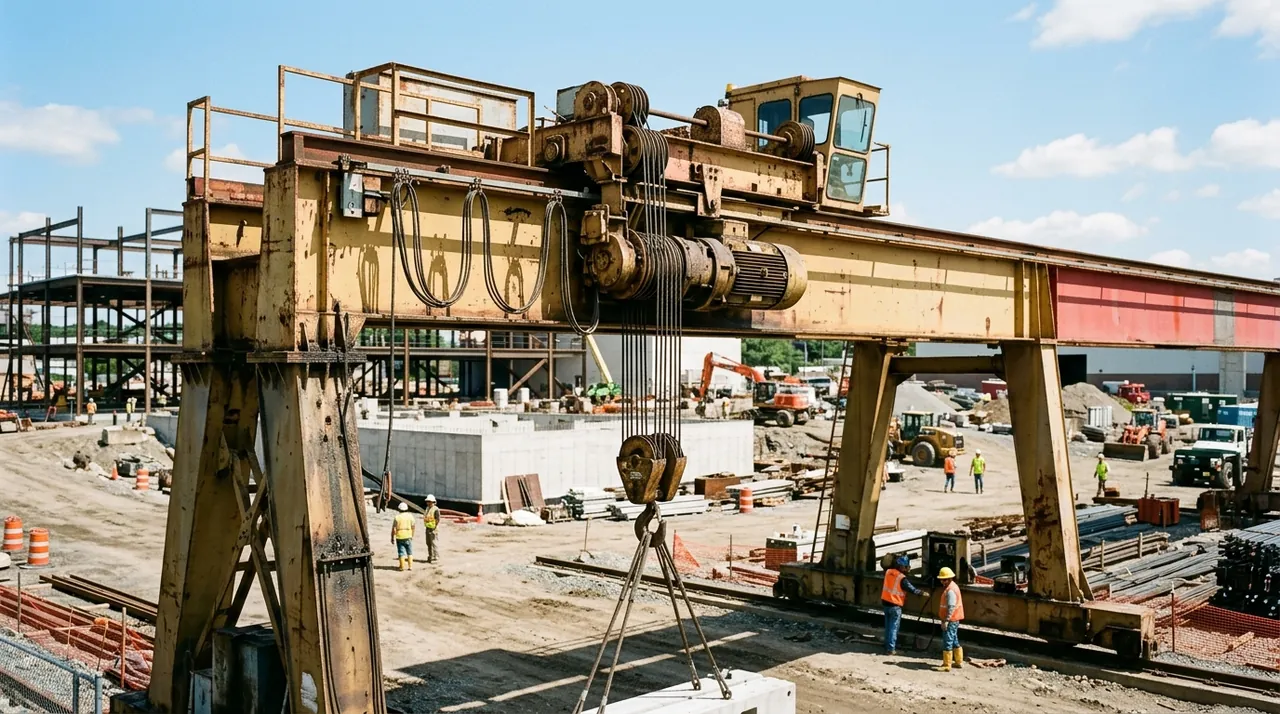
Every lift on an overhead, gantry, or marine hoist follows the same logic: know the weight, find the center of gravity, plan the path, and keep people clear. Those ideas sound simple, but they interact in ways that catch operators off guard. A load that seems safely rigged can swing the moment it clears the floor. A hoist with plenty of rated capacity can be overloaded the instant the hook drifts off center. This lesson covers the safe-lifting practices that the Massachusetts 3A exam tests directly and that experienced operators apply on every single lift.
Rated Capacity and Estimating Load Weight
The rated capacity of a hoist is the maximum load it can lift safely, and that number is non-negotiable. Before any lift you must confirm it — posted on the hoist, marked on the bridge, or in the equipment documentation — and verify that the load stays within it. Exceeding rated capacity stresses the rope, chain, and structure in ways that may not appear until the hoist fails on a later, apparently routine lift.
The harder problem is a load with no weight marked on it, which is common in industrial and marine work. You must estimate before rigging: use manufacturer data sheets, material weight tables, or ask a supervisor or engineer. Assume the load is heavier than your best guess when uncertain. The regulations require that rated capacity never be exceeded under any circumstances, so verification is not optional.
Center of Gravity and the Prohibition on Side-Pulling
A load lifts cleanly when the hook is directly over its center of gravity before the hoist takes the weight. If the hook is off to one side, the load tilts or swings as it leaves the ground, which can break a sling or pull the hoist sideways — a condition called side-loading that is prohibited on all overhead and chain hoists. The hoist rope or chain must travel straight up. Every time.
Watch the load carefully as you take up slack. If it starts to tip before clearing the surface, set it down, adjust the rigging, and try again. Correcting a rigging problem on the ground takes minutes; correcting one in the air can take much longer and endanger everyone nearby.
Controlling Swing and Traveling with the Load
Swing is generated by abrupt starts and stops and by traveling too fast. Smooth, gradual acceleration and deceleration keeps it manageable. When stopping, slow down first, then stop — do not try to use hoist motion to kill an existing swing.
During travel, keep free-floating loads as low as safely possible. A lower load has less pendulum arc if it does swing and can be landed faster if something goes wrong. Plan the full travel path before you lift: confirm overhead clearances, identify fixed structures near the load path, and make sure the landing zone is clear and ready before the load ever leaves the floor.
Exclusion Zones, Personnel Safety, and Control Discipline
No one walks under a suspended load. As operator you are responsible for maintaining the exclusion zone around and below the load path for the entire duration of the lift. If anyone enters that zone, stop the lift immediately. Not when it is convenient — immediately. The lift does not resume until the person is clear.
Use pendant, radio, or remote controls from a position where you can see both the load and the area beneath it. Communicate with riggers and signalers throughout the lift using agreed-upon signals, and confirm understanding before each movement. When the lift is complete, park the hook block clear of walkways and travel paths. An empty hook block swinging low is its own hazard to anyone moving through the area.
Key Takeaways
- •Know the rated capacity before every lift and never exceed it — estimate load weight from data sheets or tables when no marking is present.
- •Position the hook directly over the center of gravity before lifting; side-pulling is prohibited and can cause sling failure or structural damage to the hoist.
- •Use smooth, gradual control inputs to prevent swing, travel with the load low, and plan the full path and landing zone before picking up.
- •Never lift loads over people; stop the lift immediately if anyone enters the exclusion zone and do not resume until they are clear.
- •After completing a lift, park the hook block clear of all walkways and travel paths.