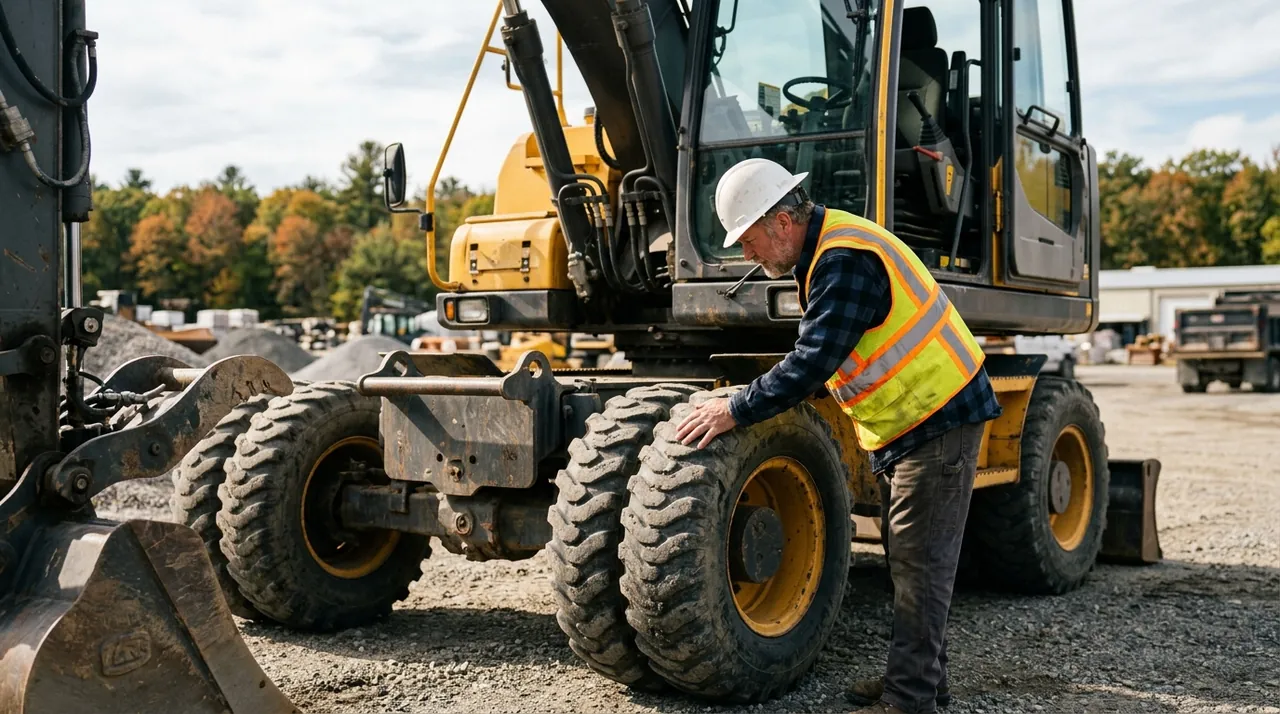
Every shift on an excavator or skid steer begins the same way: before the machine moves, you walk it. The pre-shift inspection is the operator's single most reliable defense against mechanical failure, and on the Massachusetts 2A exam it is treated as a core competency rather than a formality. The goal of this session is to make the inspection a fixed habit — a repeatable 360-degree routine you can complete in ten to fifteen minutes that catches the small problems before they become the leak, the cracked weld, or the dead brake that ends up in an incident report.
Why the inspection is required, and who has to do it
OSHA's earthmoving and general-equipment rules — 29 CFR 1926.20 and 1926.600 — require that equipment be inspected by a competent person on a frequent and regular basis. In practice that means before each shift and again after the machine is relocated to a new work area, because transport and ground conditions change what you are exposing the machine to. "Competent person" is a defined term: someone who can both recognize a hazard and has the authority to take corrective action, including pulling the machine from service. As the operator you are usually that person, which is why the inspection is your responsibility and not something you can assume the last shift handled.
The 360-degree walk-around
A good inspection is systematic, not random. Start at a fixed point — typically the cab door — and work around the entire machine in one direction so nothing gets skipped. As you walk, look under the machine for fresh fluid on the ground, which is the fastest tell for a developing leak, and scan the ground itself for the soft spots, edges, and obstructions you will be working around.
Work through the fluids next: engine oil, hydraulic fluid (check both level and color — milky or burnt fluid signals a problem), coolant, and fuel. Then inspect the hydraulic hoses and fittings closely, because hydraulics are where excavating equipment most often fails. You are looking for chafing, kinks, cracked outer covers, and any weeping at the fittings.
Structure, undercarriage, and the cab
On an excavator, check the undercarriage: track tension, roller and sprocket condition, and pin security. On a skid steer, the lift arms get the attention — cylinder pins, arm pivot bolts, and the scissor-point guards that keep a person out of the pinch zone. For both machines, inspect the working structure — boom, stick, and bucket on the excavator, the loader arms and mounting ears on the skid steer — for structural cracks, failing weld seams, and worn or loose teeth.
Finish inside and around the cab: a working seat belt, mirrors aligned, glass without visibility-blocking cracks, and a fire extinguisher that is present, mounted, and showing a charged gauge. Then run the operational checks — horn, backup alarm, responsive controls, and brakes that hold under load.
Conditions that take the machine out of service
Some findings are judgment calls; others are not. The following are immediate, no-exception removal-from-service conditions: an active hydraulic leak from any hose or fitting; non-functional brakes or steering; a damaged or modified ROPS/FOPS; a non-functional seat belt; structural cracks in the boom, stick, or bucket-mounting ears; a dead horn or backup alarm; and a missing or discharged fire extinguisher. When you find one, the correct action is always the same — tag the machine out of service and notify your supervisor. Production pressure, an urgent job, or a 'temporary fix' never overrides this. The exam will test that instinct directly, and so will the job.
Key Takeaways
- •Inspect before every shift and after every relocation — it is an OSHA requirement under 1926.20 and 1926.600, done by a competent person.
- •Work a fixed 360-degree route so nothing is skipped: ground and leaks, fluids, hoses, undercarriage/lift arms, structure, cab, then operational checks.
- •Hydraulics fail most often — inspect hoses for chafing, kinks, cracked covers, and weeping fittings.
- •Removal-from-service conditions (leaks, bad brakes/steering, damaged ROPS, dead seat belt, structural cracks, dead horn/alarm, no extinguisher) mean tag out and report — no exceptions.