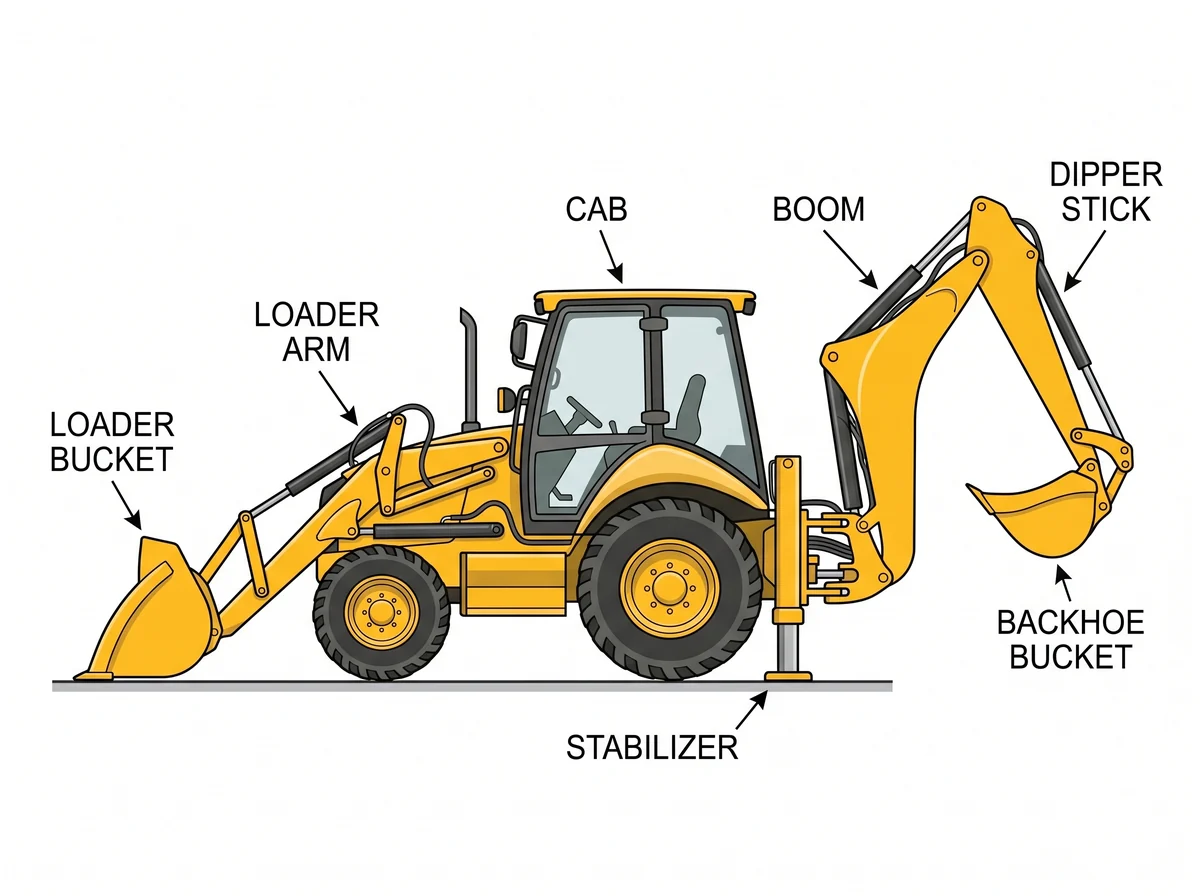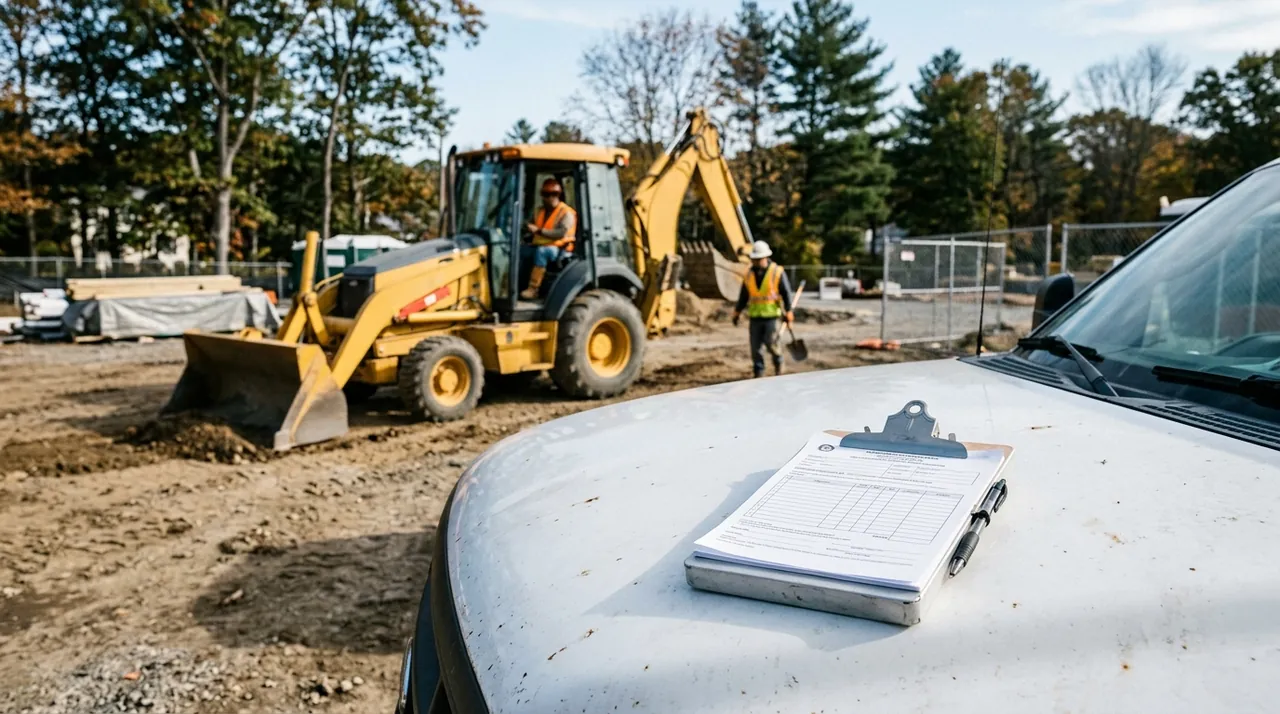
Soil classification is the foundation of trench safety. Before a trench box gets set or stabilizers hit the ground, a competent person has to look at what the earth is made of and decide how stable it is. OSHA's excavation standard does not let you guess; it gives you specific criteria, and getting it wrong is measured in lives. As a 2B operator you may not always be the one signing off on the classification, but you are the person closest to the trench wall — which makes this your business.
The Three Soil Types and How to Tell Them Apart
OSHA defines three soil types based on unconfined compressive strength. Type A is the strongest, at 1.5 tons per square foot or greater — hard clay and hardpan are typical examples. Type B falls between 0.5 and 1.5 tsf, covering materials like silt, angular gravel, or previously disturbed soil that was once stronger. Type C is below 0.5 tsf: loose gravel, sand, and any soil that is submerged or water-bearing.
Field classification relies on manual and visual tests. The thumb-penetration test gives you a quick read: Type A resists thumb pressure, Type B dents with firm effort, Type C gives way easily. Dry-strength and plasticity tests add more data. Visual inspection checks for fissure planes, slippage scars, and layering — all signs of weaker or unstable material.
Conditions That Force a Downgrade
Apparent strength does not determine the final classification — disqualifying conditions do. Even soil testing at 1.8 tsf cannot be called Type A if it is fissured, subject to vibration, previously disturbed, or part of a layered system sloping toward the excavation. Any one condition is sufficient to downgrade it.
Previously disturbed ground looks identical to undisturbed soil from the surface, so always ask: was this area backfilled, graded, or crossed by a utility at any point? Standing water and active seepage are automatic downgrade triggers because water destroys the cohesion and friction that hold soil particles together. Vibration from nearby equipment or heavy traffic has the same destabilizing effect. When any of these conditions are present, classify to the least stable type and protect accordingly.
Maximum Slopes and When to Use a Trench Box Instead
When sloping is the chosen protective method, each soil type has a maximum allowable angle. Type A may be sloped no steeper than 3/4 horizontal to 1 vertical — about 53 degrees. Type B requires a 1:1 slope, one foot of setback per foot of depth. Type C demands a 1.5:1 slope, roughly 34 degrees, which consumes a lot of horizontal room on tight urban sites. When the footprint is not available, a trench shield is the practical answer.
A trench box does not shore the soil — it gives workers a protected zone the surrounding earth cannot collapse into. The box must be rated for the actual depth and conditions. Workers stay within the shielded section at all times. When pulling the box out, always extract it from the bottom upward while backfill is placed simultaneously. Pulling from the top first exposes the lower wall while work may still be active nearby. As the 2B operator, your job is to dig the trench to the right dimensions, lower and extract the box, and move pipe and materials from outside the excavation — never swing or dig over workers in an unprotected section.
Key Takeaways
- •Type A soil is 1.5 tsf or greater, Type B is 0.5 to 1.5 tsf, and Type C is below 0.5 tsf — soil strength drives every protective-system decision.
- •A single disqualifying condition — fissuring, previous disturbance, vibration, standing water, or adverse layering — overrides apparent strength and forces a downgrade to the least stable type.
- •Maximum allowable slopes are 3/4:1 for Type A, 1:1 for Type B, and 1.5:1 for Type C — exceeding these in the wrong soil creates a cave-in risk.
- •A trench box must be rated for the depth and conditions; pull it from the bottom upward while backfilling to keep workers protected throughout removal.
- •The 2B operator digs, places, and pulls the box, and feeds materials from outside — never work over or swing over unprotected trench sections.